
Its significance is also social: the port is framed as a driver of employment and regional development, a narrative that sits in tension with the ecological burden borne by fishing and Afro-descendant communities along the bay and with their demands for environmental justice. ContainerHavens research in Cartagena asks how the port’s narrative of connectivity and growth holds up against the reality experienced by communities along its edges, and how a fragmented, hard-to-navigate governance model shapes the contestation of that narrative.
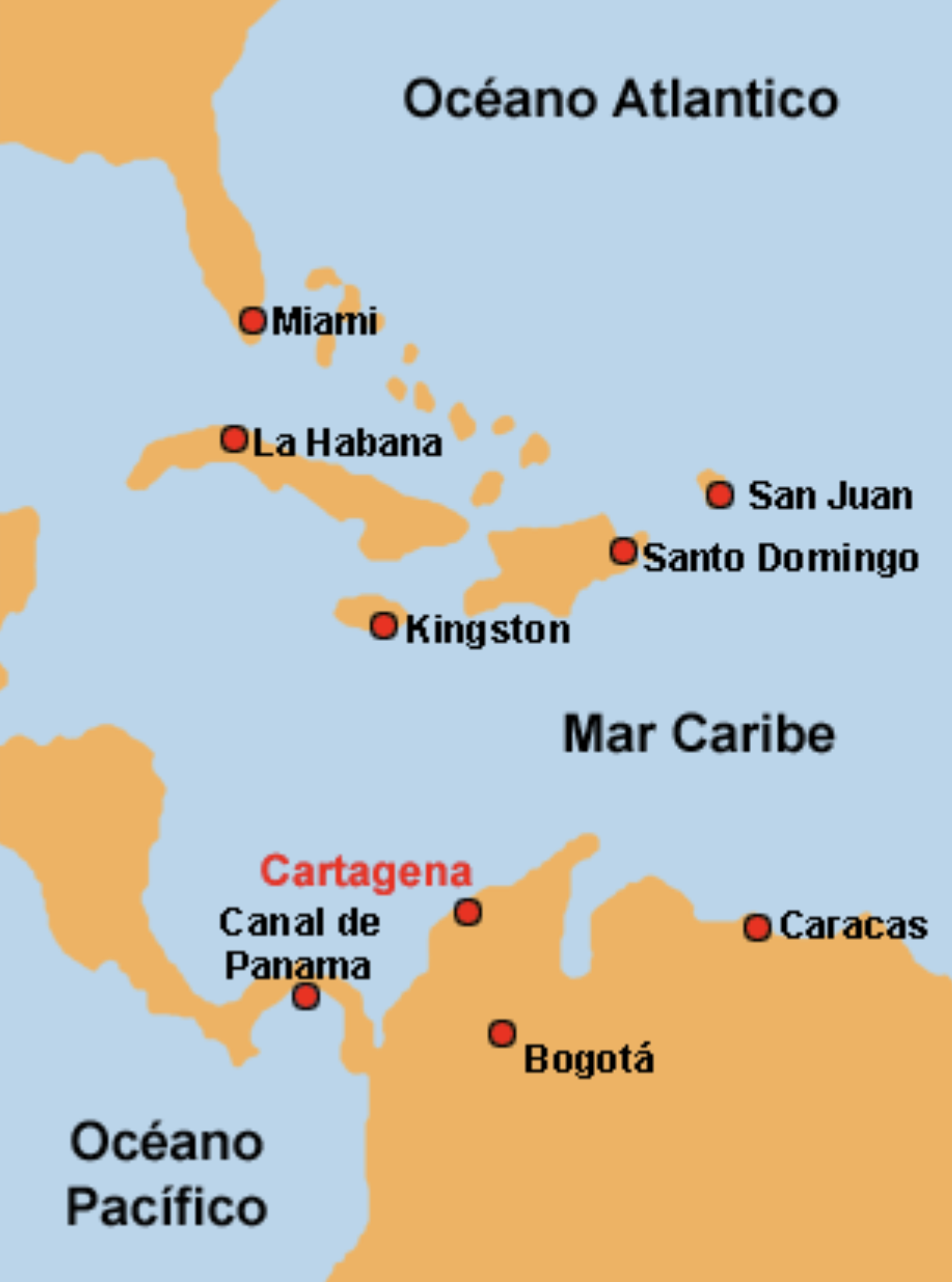
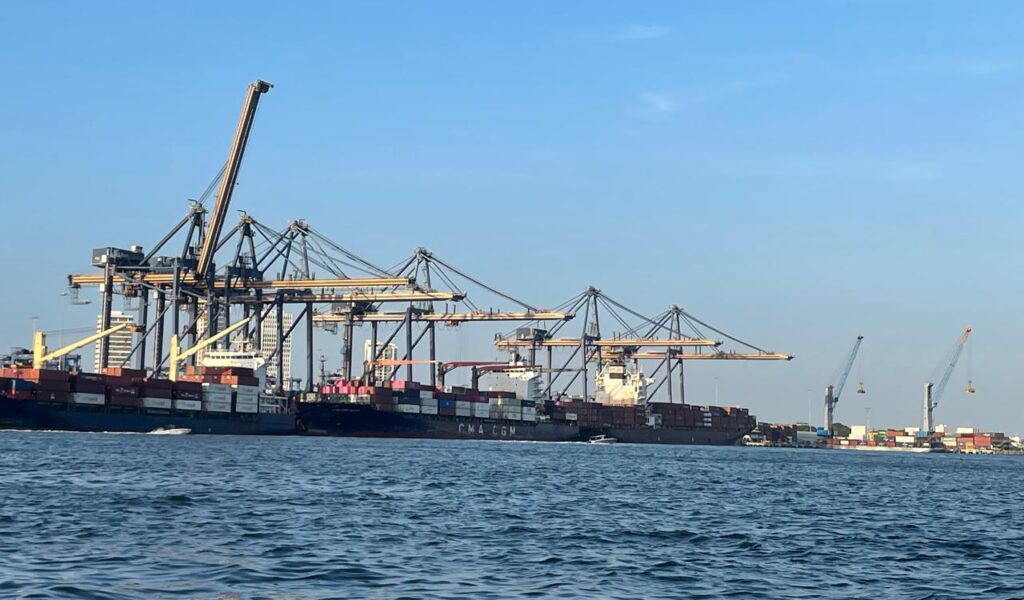
In operational terms, the port moved more than 3.7 million TEUs in 2024, a record for Grupo Puerto de Cartagena (GPC), the corporate group formed by the port’s two terminal operators, Sociedad Portuaria Regional de Cartagena (SPRC) and Contecar. Its logistics network connects to several hundred ports worldwide and its own reporting has put its contribution to national GDP at around 2% (a 2019 estimate), with a larger share of the GDP of the department of Bolívar. GPC also presents itself through a sustainability narrative: 6,000 solar panels installed on its logistics centre generate close to 2.98 million kilowatt-hours a year, covering roughly 10% of the port’s own energy demand. These figures anchor an image of a modern, connected, and increasingly green port.
That image sits alongside a different set of impacts. Port and industrial expansion along the bay has been linked to pollution, sediment loading, and pressure on coastal ecosystems including mangroves. On the social and legal front, conflicts have been documented over the absence of effective prior consultation with Afro-descendant communities, notably in La Boquilla and Tierra Bomba, restricting artisanal fishers’ access to traditional fishing grounds and eroding an economic base built on generations of fishing knowledge.
Both communities have pressed this claim before the Constitutional Court and won. In La Boquilla, the Court found in 2012 that the national maritime authority (DIMAR) had granted a private hotel operator a concession over more than 8,000 square meters of beach, used for generations by local carperos for tourism-related work and by the community for fishing and traditional celebrations, without the prior consultation Afro-descendant communities are entitled to under ILO Convention 169; the concession was voided and DIMAR ordered to consult before proceeding. For the four Afro-descendant community councils of Tierra Bomba island (Tierra Bomba, Punta Arena, Bocachica, and Caño del Oro), the Court ruled in 2018 that the Ministry of Interior had wrongly certified the absence of ethnic communities in the path of a terminal expansion project that would have filled several hectares of the bay for container storage without ever sending anyone to check; the works were suspended pending a proper consultation process.
What is a carpera?
A carpera (or carpero) is someone who works on Colombia’s Caribbean beaches setting up and renting out carpas (the beach tents, chairs, and mats tourists use for shade and comfort), often alongside selling food and drinks. It is a recognised, if informal, tourism-economy occupation along the coast, with local governments requiring carperos to register and wear identification. In La Boquilla case, the petitioner had worked as a carpera on the concessioned beach for 15 years before the concession was granted.
Bazurto and the fishing communities
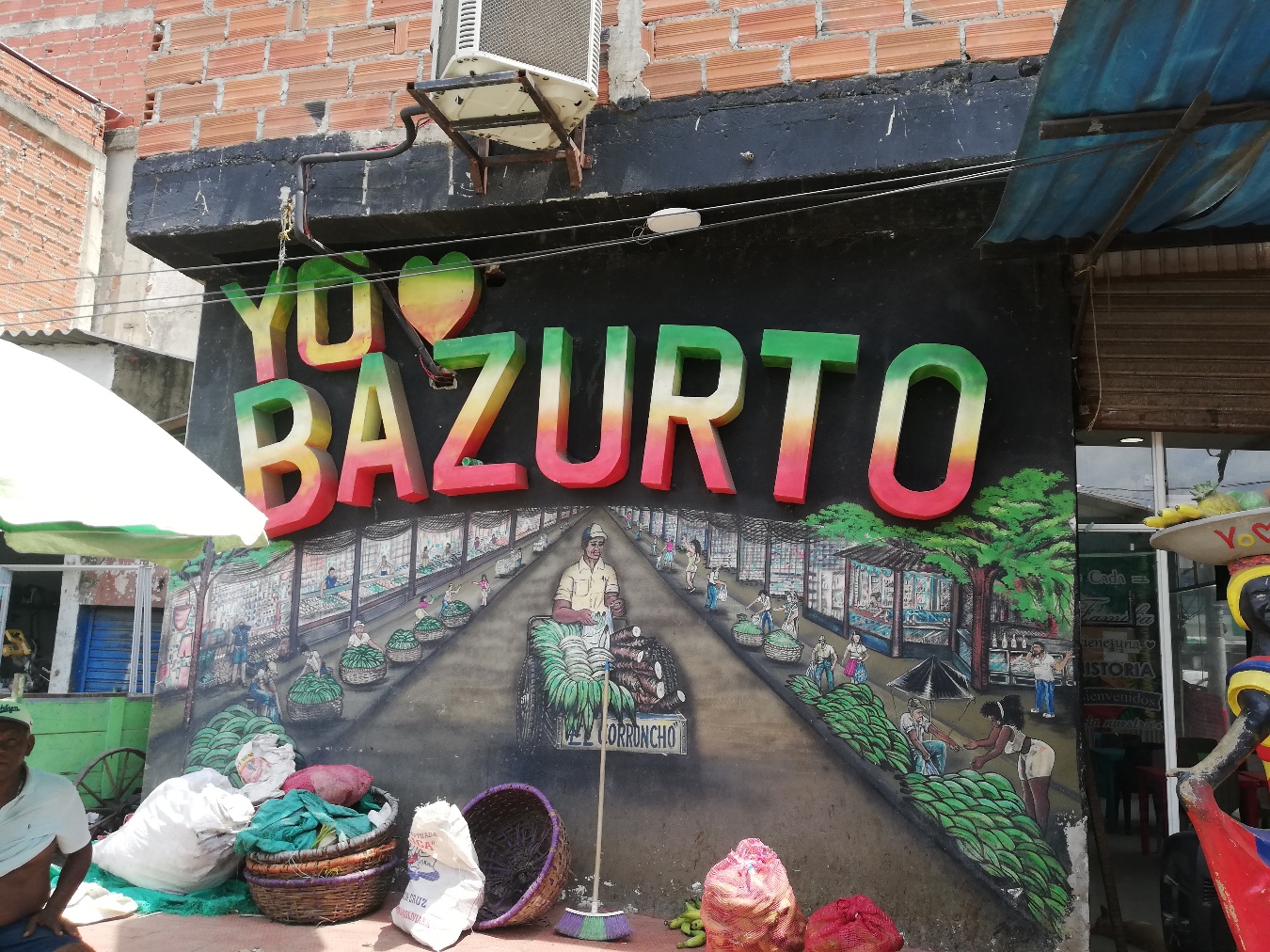
Fieldwork carried out for this case study in June 2026 by ContainerHavens research assistant Tamara Navarro, drawing on semi-structured interviews with lawyers, fishers, market vendors, port workers, environmental officials, and civil society representatives, complemented by participant observation in the bay, at the Bazurto market, and on the island of Tierra Bomba, provides in-loco context to these tensions. Fishing communities described how heavier rains and rising tides have made long-fished waters harder to reach, while heat waves have driven drought-like conditions and fish die-offs; they also pointed to industrial-scale fish farming as a direct threat to their livelihoods, alongside a growing sense of precarity about the future of their trade.
At the Bazurto market, Cartagena’s principal public market and a historic anchor of its economic and social life, vendors and fishers described an economy still oriented around the sea but increasingly disconnected from the port as a formal institution: in day-to-day commercial life, the port was rarely mentioned as a relevant actor at all. On Tierra Bomba, residents described unequal access to services and formal employment and exclusion from the consultation processes that shape decisions about their own territory, alongside a keen awareness of the port’s proximity without any sense of shared belonging to it.
Governance on paper and on the ground
Most of the world’s major container ports run on some version of the landlord model: a single Port Authority holds the land, sets strategy, and coordinates with private terminal operators, even where, as in Antwerp-Bruges (also covered in this research), ownership is split across more than one city. Colombia took a different path. When the state monopoly (Colpuertos) was liquidated in 1991, the law creating its replacement was meant to unify port policy under one national authority, but during the legislative process, that single “General Directorate of Ports” was split apart instead.
The Ministry of Transport kept policy-making, a separate Superintendencia was created for oversight, and subsequent decrees have folded in still more institutions: DIMAR for maritime operations, ANI for concessions and infrastructure, ANLA for environmental licensing, CORMAGDALENA for the Magdalena River corridor, and INVIAS for the roads and canals connecting to ports, among at least ten bodies in total.
The ways jurisprudence has evolved over the years add a second layer. Until mid-2025, Cartagena and Colombia’s other port districts (Barranquilla, Santa Marta, Buenaventura) held a de facto veto: a negative opinion from the district was enough to block a port concession or its modification. In June 2025, the Constitutional Court struck it down, ruling that letting a district’s opinion override the national government overstepped the constitutional division of powers between the nation and its territorial entities; ports and their concessions, the Court held, are a matter of national interest, tied to Colombia’s regulation of foreign trade and its designation of major infrastructure. Districts retain the right to comment, recommend, and formally object during a concession proceeding, but the decision itself now rests unambiguously with national bodies.
Fieldwork along the bay adds a physical dimension to that disconnection, as the walls, metal fencing, and barbed wire mark a spatial closeness between port and city that never translates into social integration. Two further perceptions surfaced in the interviews.
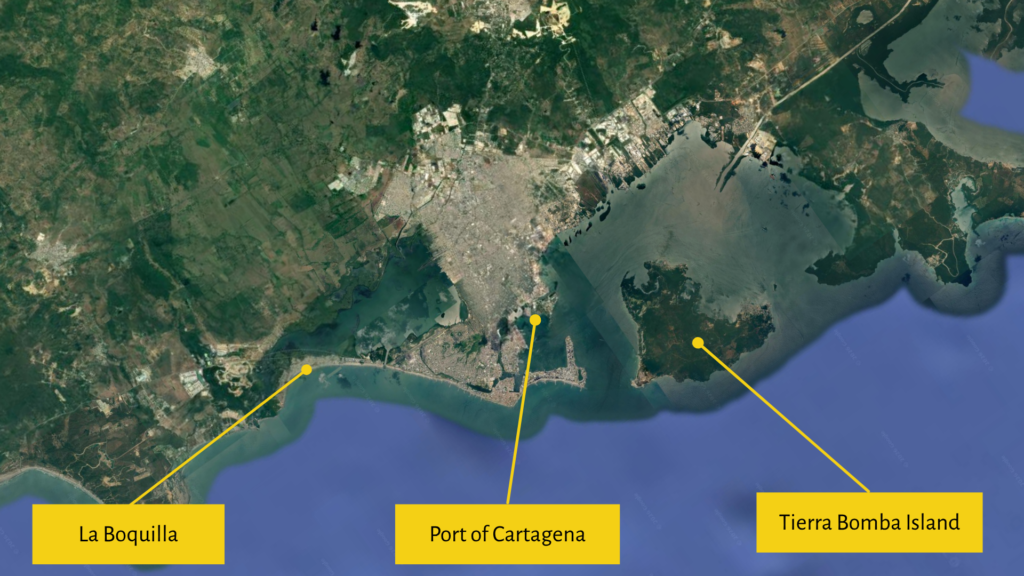
La Boquilla
La Boquilla is a majority Afro-descendant fishing village on Cartagena’s northern coastline, between the Caribbean Sea and the Ciénaga de la Virgen, about 15 minutes from the historic centre. Settled by descendants of enslaved Africans who left the walled city after abolition, it was formally recognised as a Black community with collective land rights under Ley 70 de 1993 and has organised as a Consejo Comunitario since 2009. Its economy runs on artisanal fishing and community tourism along roughly six kilometres of beach, though decades of hotel and real-estate pressure have made land tenure the community’s central, ongoing struggle.
Tierra Bomba
Tierra Bomba is an island of about 20 square kilometres sitting inside Cartagena Bay itself, separated from the city by water yet administratively part of it. Home to roughly 9,000 to 10,000 people across four corregimientos or administrative districts (Tierra Bomba, Punta Arena, Caño del Oro, and Bocachica), it holds colonial-era fortifications guarding the bay’s Bocachica channel, yet its residents face chronic gaps in drinking water, sanitation, healthcare, and transport that many describe as institutional neglect.
First, residents tend to describe “the port” not as an integrated system but as a fragmented set of independent terminals. Second, community members overwhelmingly named the mayor’s office, rather than any national body, as the authority responsible for port-related problems.
The picture that emerges is of a port that is economically central to Cartagena and structurally distant from it. On the one hand, it is portrayed as efficient and well connected; on the other, it remains largely illegible to the communities living alongside it. As part of its comparative socio-legal study of five of the world’s largest container ports, ContainerHavens asks how the fragmented governance of the Colombian port system has contributed to the separation between the city and its port, and what legal consequences this separation has for the artisanal fishers, market vendors, and Afro-descendant communities of La Boquilla and Tierra Bomba.

Latest updates on the Port of Cartagena
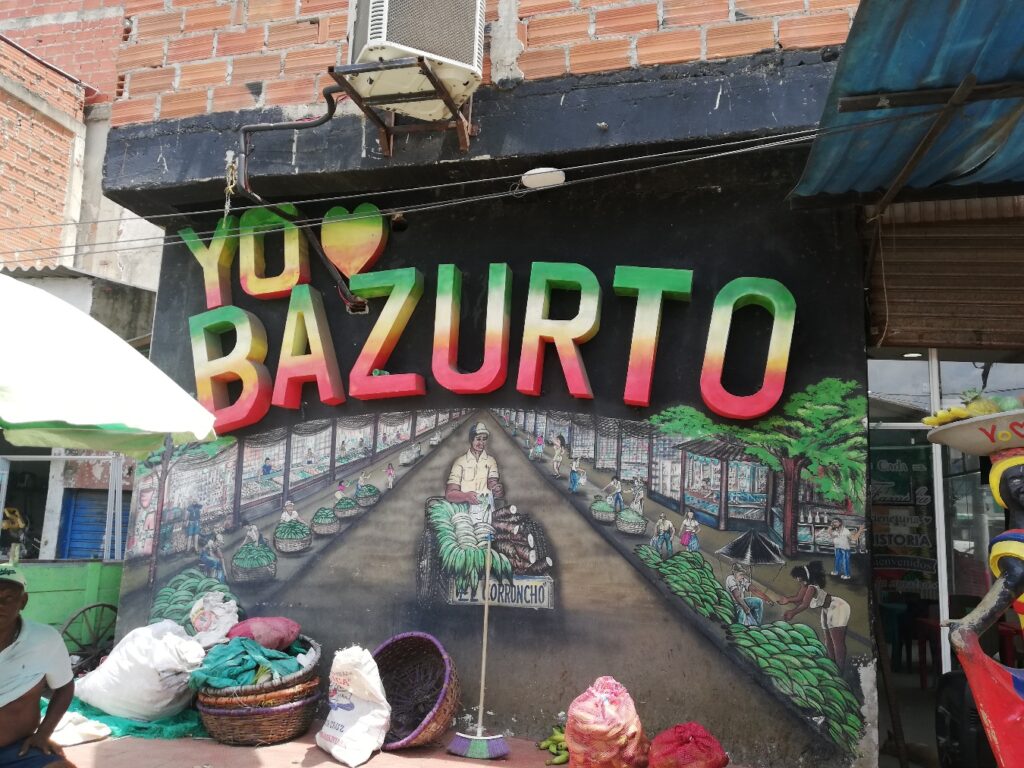
Cartagena y sus puertos: Cercanía física, distancia social
Barcas de pesca artesanal en la playa de La Boquilla, con el perfil de rascacielos…
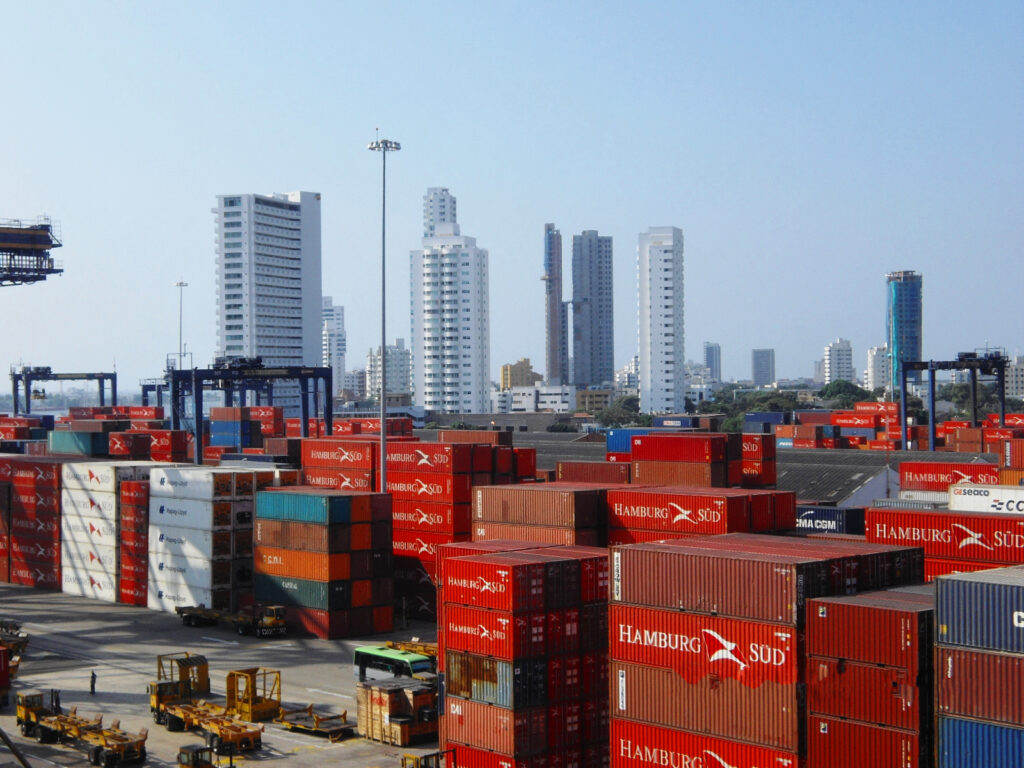
Cartagena and its Ports: Physical Proximity, Social Distance
Artisanal fishing boats on the beach at La Boquilla, with Cartagena’s high-rise skyline in the…
About this research
This page draws on Adriane Takahara’s fieldwork in Cartagena. If any of this connects with what you’re working on, we’d be glad to hear from you.
University of Antwerp
Faculty of Law and Institute of Development Policy (IOB)
Stadscampus – Gebouw V
Venusstraat 23
2000 Antwerp, Belgium
Research sites
Follow us
ContainerHavens 2026 | Disclaimer | Privacy policy | Cookie policy