
Research sites
Antwerp-Bruges • San Pedro Bay • Shanghai • Tangiers • Cartagena
The Port of Antwerp
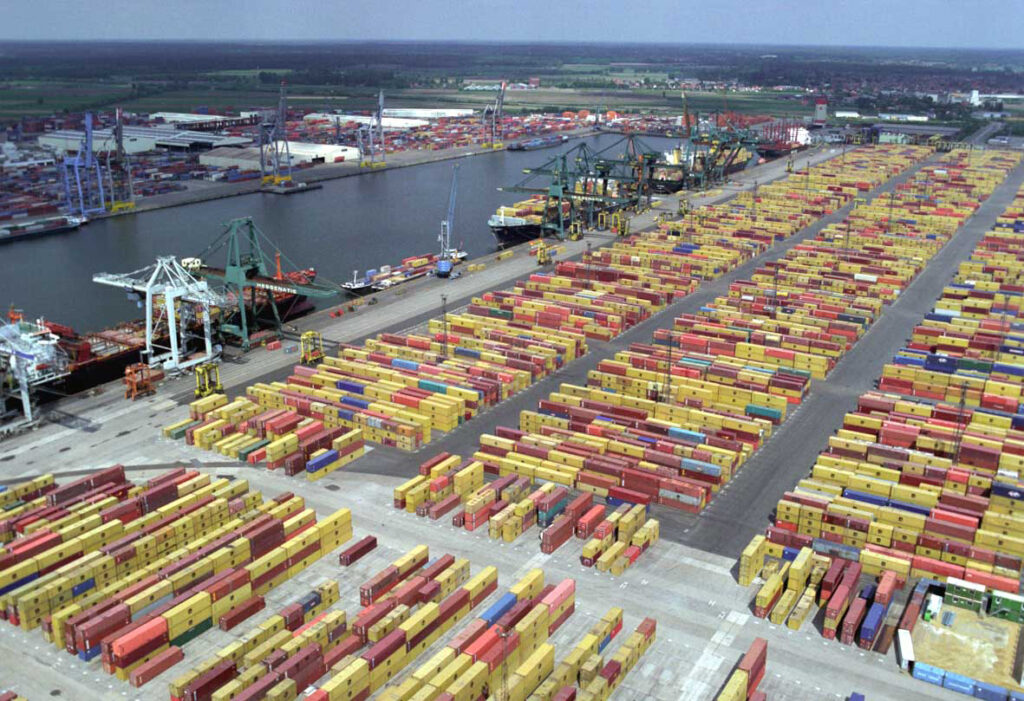
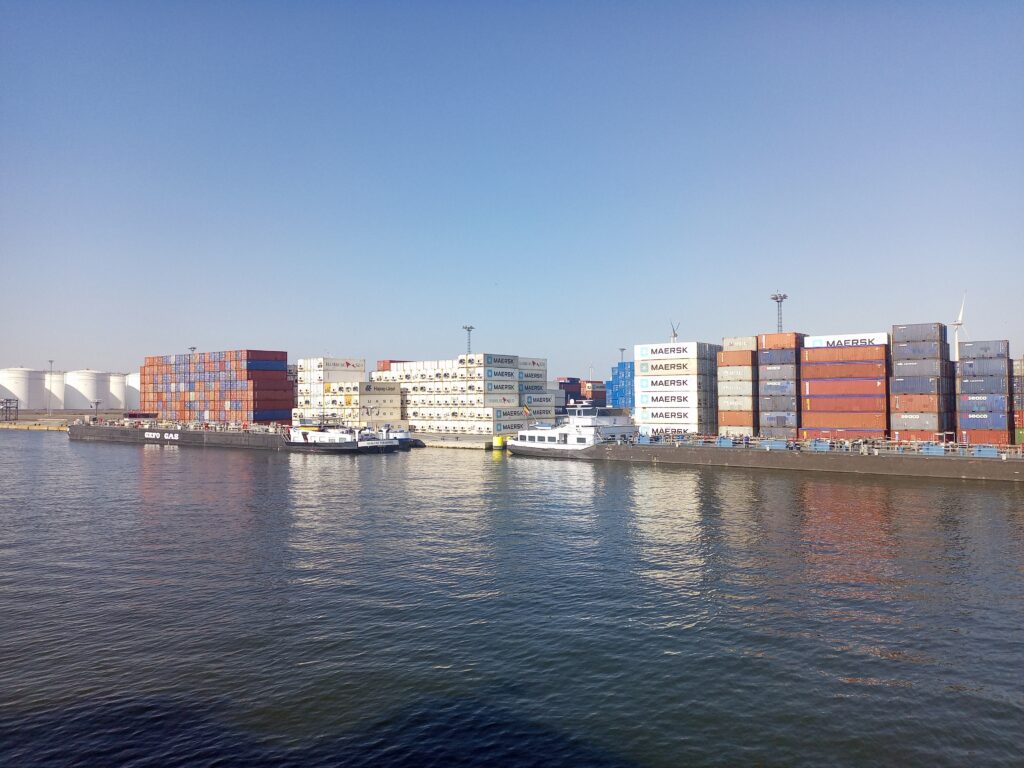
The Port of Antwerp is one of Europe’s most important maritime gateways and is strategically located along the Scheldt River in Antwerp. It is developed across both the left and right banks. Due to its location, it has become a center for international trade, logistics, and chemical production. Today, it forms part of the broader Port of Antwerp-Bruges, making it the second largest port in Europe spanning across 14,956 hectares. Ownership of the port is shared between the City of Antwerp (80.2%) and the City of Bruges (19.8%). Its inland location, 80 kilometers from the North Sea, and the dense network of rail, road, and inland waterway connections make it a key node that links the European hinterland to the larger global supply chains.
At the same time, the port’s scale and industrial activities generate uneven social and environmental outcomes. While it creates approximately 161,533 direct, indirect and induced employment opportunities for both Belgians and non-Belgian workers, these opportunities are structured through a highly segmented labour system. Registered and unionised dock workers coexist with more precarious, non-unionised, and outsourced forms of labour who often lack formal recognition in port labour regimes yet remain essential for port operations.
Environmentally, historical and ongoing port expansion and infrastructure projects have reshaped surrounding landscapes, affecting local community and biodiversity. Emissions from shipping, port operations and chemical industries contribute to air pollution, with associated health and ecological risks in the wider hinterland. These dynamics highlight the uneven distribution of benefits and harms of port developments.
Read more
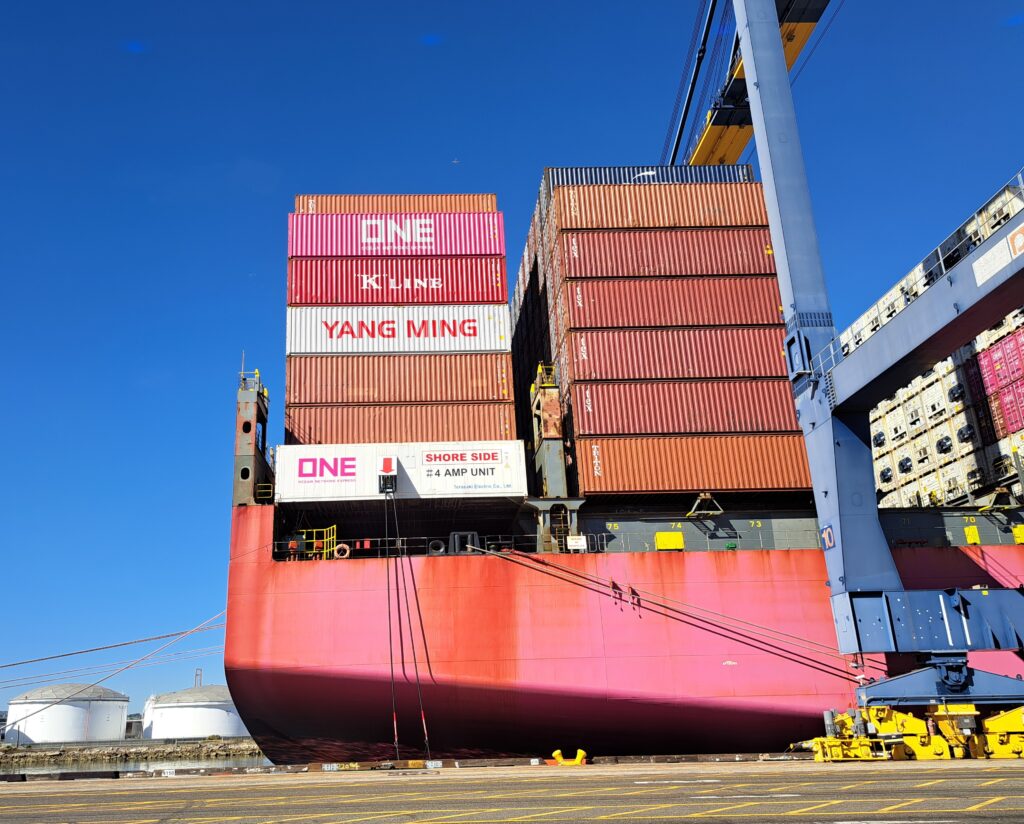
San Pedro Bay Port Complex (Los Angeles and Long Beach)
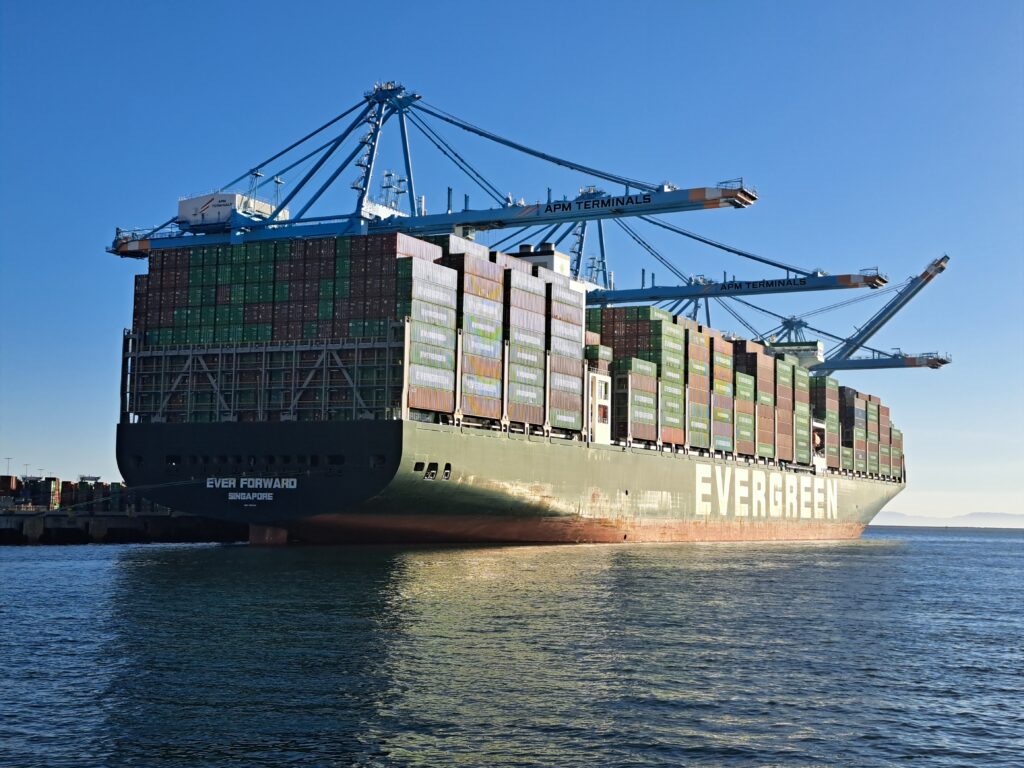
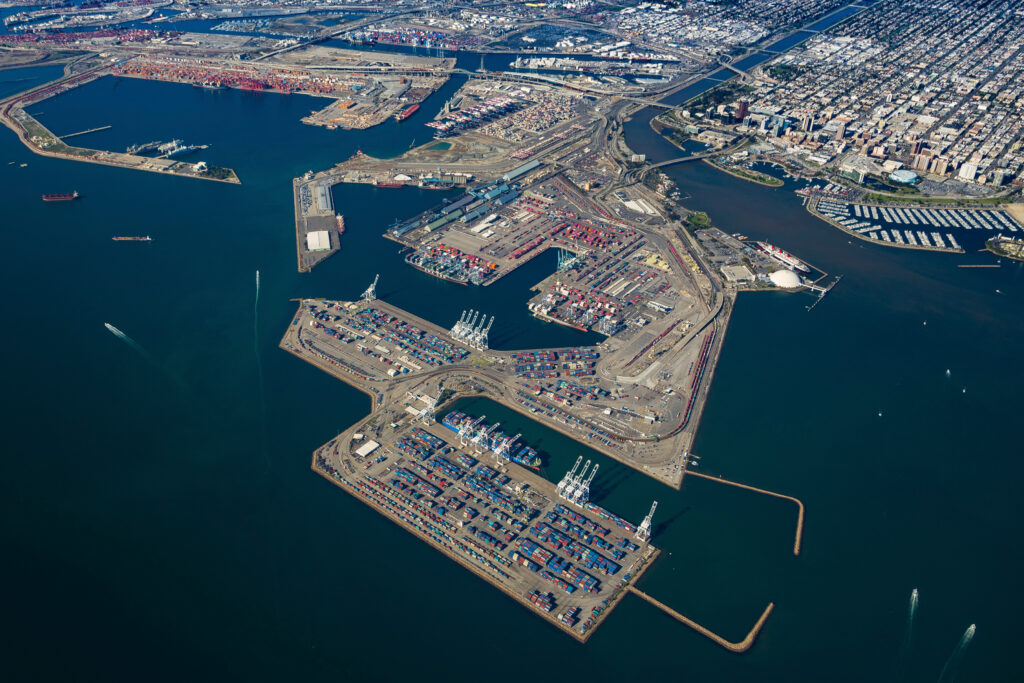
The Port of Los Angeles and the Port of Long Beach together form the San Pedro Bay Port Complex, the largest maritime gateway in North America in terms of twenty-foot equivalent units (TEU). Handling over 30% of all US imports, the two ports operate as distinct administrative entities but function as an integrated system within the global supply chain. Individually, both ports rank among the busiest in the world, and together, they rank above top 10 globally.
The Port of Los Angeles spans about 7,500 acres of land and water along a 43-mile waterfront, encompassing San Pedro, Wilmington, and Terminal Island. It operates as a department of the City of Los Angeles and is governed by the Los Angeles Board of Harbour Commissioners, appointed by the Mayor of Los Angeles.
Similarly, the Port of Long Beach is a department with the City of Long Beach and is governed by the Long Beach Board of Harbour Commissioners appointed by the Mayor of Long Beach. It sits on more than 3,500 acres of land and 4,600 acres of water.
Despite their economic significance, the ports generate profound social and environmental impacts. Employment figures associated with the Port of Los Angeles is about 1 million jobs in California alone and about 3 million jobs countrywide. Similarly, the Port of Long Beach states that it supports about 1 million jobs in California and 2.7 million across the country. Our assumption is that these numbers reflect port-related direct, indirect and induced jobs that can be accounted for in port metrics. However, such metrics obscure labour inequalities, particularly among truck drivers classified as independent contractors, as well as other non-unionised, gendered and racialized workers who often experience precarious employment, low wages, and limited protections.
Environmental impacts are equally significant. Emissions from port terminals, ships, trucks and rail contribute to severe air pollution, disproportionately affecting nearby communities, many of whom are racialised, migrant, and working-class populations. These conditions have raised concerns about public health and environmental justice. Although federal and local governments have made efforts to address the emissions through the Clean Air Action Plan, the cumulative impacts of logistics activities have remained significant. These challenges have generated tensions between environmental justice and citizen movements, and labour unions.
As such, the San Pedro Bay Ports illustrate how global trade infrastructures generate both economic advantages, and uneven, and sometimes contested socio-environmental outcomes.
Read more
The Port of Shanghai
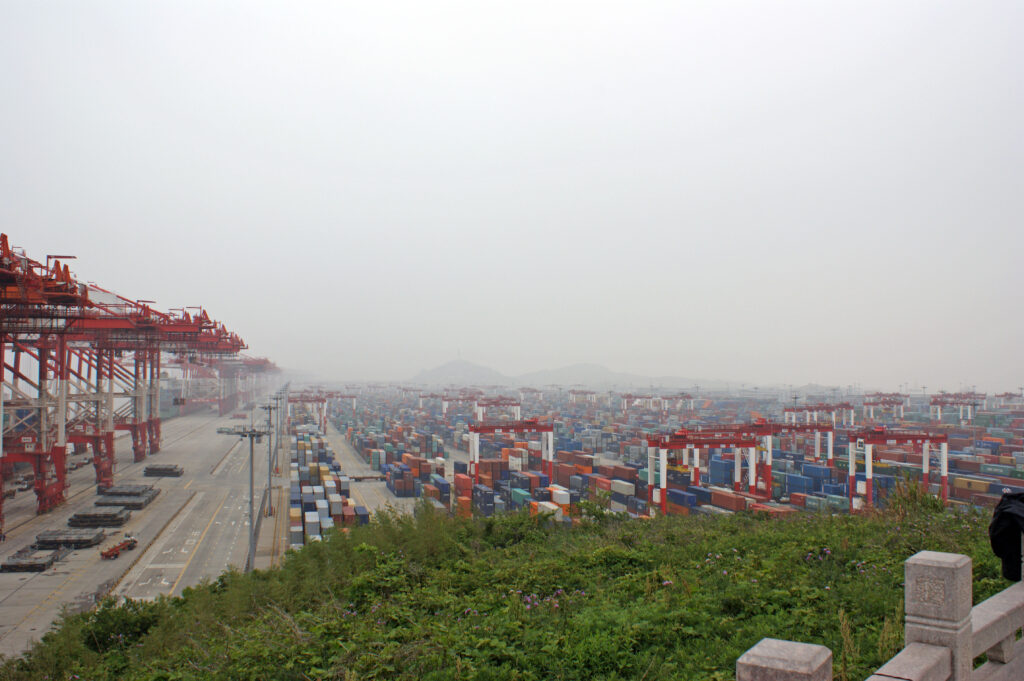
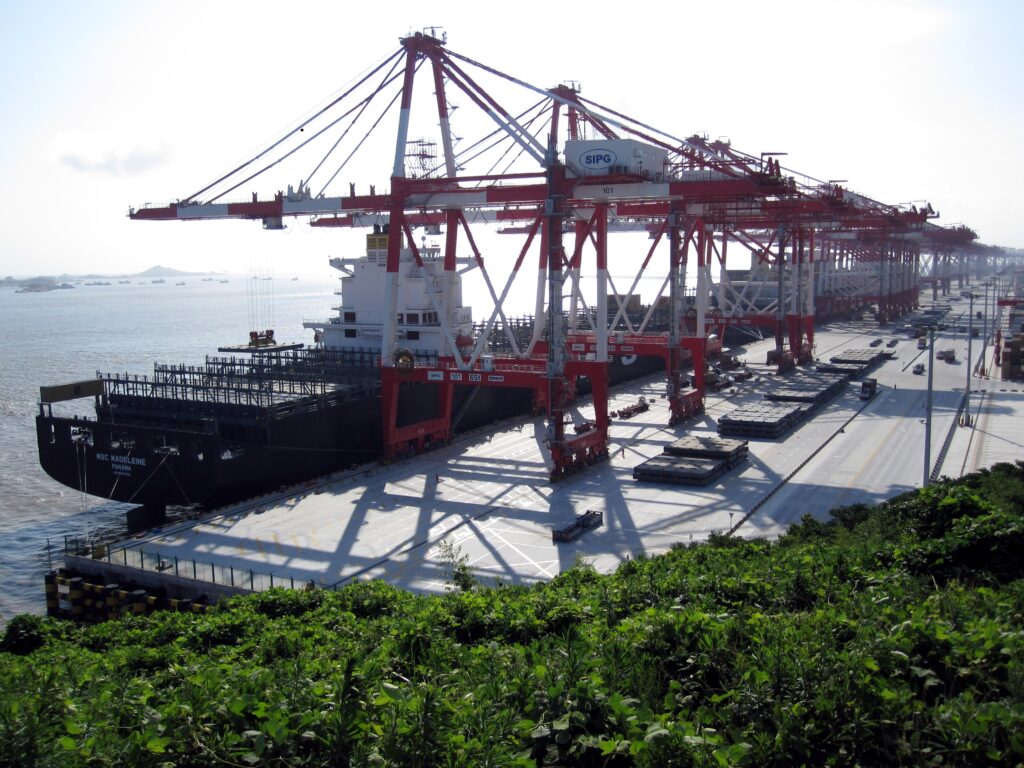
Shanghai Port is located on the central part of the east coast of mainland China, strategically positioned along the Yangtze River, the so called “golden waterway,” and coastal transport channels of the “T” type water transport. It is a conglomeration of multiple ports terminals. The main container terminals are concentrated in Yangshan, Waigaoqiao and Wusongku and together comprise a total berth area of 7.58 million square meters with approximately 49 container berths. Other terminal activities such as general cargo, break bulk, special cargo and roll-on/roll-off as well as cruise activities are dispersed across Luojing, Wusongku, Waigaiqiao, Longwu, and the North Bund areas.
Public terminals in the port are managed by the Shanghai International Port Group Company (SIPG), a public listed company on the Shanghai Stock Exchange with the Government being the largest shareholder. SIPG not only carries out port handling operations but also integrated logistics services such as transportation and container storage yards. The Port has been ranked as number 1 port globally by container throughput for more than a decade and was among the first ports to exceed 50 million TEUs.
The Port has expanded through a port-industry-city development strategy integrating shipping, finance, trade, and industrial zones, including the China (Shanghai) Pilot Free Trade Zones near key terminals. Central to this strategy is digital intelligence and port automation. To this end, the Yangshan Phase IV Container Terminal and Luojing Terminal are fully automated, with port handling operations in Yangshan Phase IV controlled remotely from approximately 35 kilometers away.
Despite its economic significance, the port’s rapid growth generates uneven social outcomes. Employment is highly stratified, with internal migrants and subcontracted workers playing critical but often precarious roles. While automation and digitalization increase port efficiency and competitiveness, they also reshape labour organisation and redistribute risks and benefits across workers.
Shanghai represents the contradictions of modern maritime ports: drivers of economic growth and connectivity, yet the social costs are uneven.
Read more.
Tanger Med Port Complex
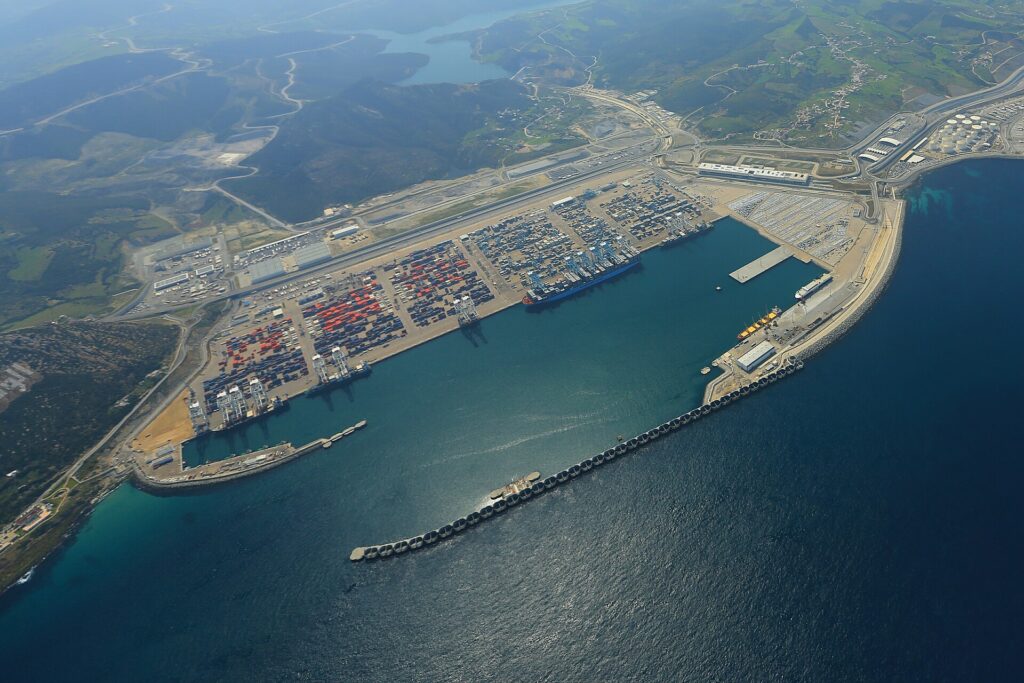
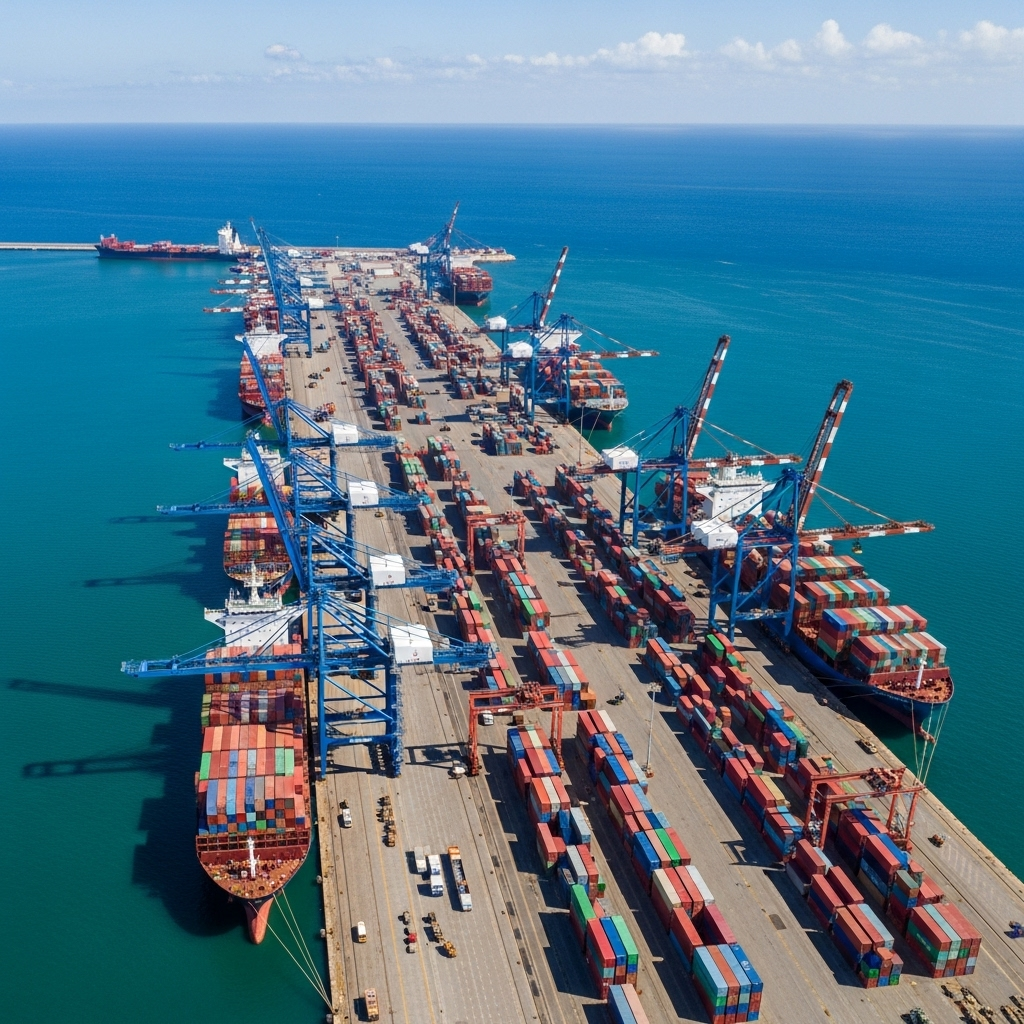
The Tanger Med Port Complex is among the fastest growing and most advanced maritime hubs in Africa and the Mediterranean region. Strategically situated on the Strait of Gibraltar and at the crossroads of major global shipping routes, the port functions as a critical gateway connecting Europe, Africa, and Asia. Developed as an integrated port and industrial platform, and managed by the Tanger Med Special Agency,an entity established specifically for this purpose, it plays a central role in international trade, logistics, and manufacturing networks.
The Tanger Med Port Complex spans approximately 1,000 hectares and is composed of several interconnected components. Tanger Med Port 1 includes two container terminals alongside rail, hydrocarbon, general cargo, and vehicle terminals. Tanger Med Port 2 adds two additional high-capacity container terminals, reinforcing the port’s position as a global transshipment hub. The complex also features a dedicated Passenger and Ro-Ro port with border control, truck and passenger boarding infrastructure, and maritime station facilities, as well as the Tanger Med Port Center, a 29,000 m² business hub for port and maritime stakeholders.
Container activity forms the backbone of the port’s operations. Across four terminals with a combined quay length of 3,600 meters and depths of up to 18 meters, the port complex has a nominal capacity of 9 million TEUs. In 2024, it surpassed this capacity, handling 10,241,392 TEUs. Global shipping lines and operators include major actors such as APM Terminals, Eurogate, and leading carriers like Maersk, CMA CGM, and Hapag-Lloyd, which operate under concession agreements.
Beyond containers, Tanger Med is strongly connected to the automotive industry, working with companies such as Renault and Stellantis. Its vehicle terminals, with a capacity of one million vehicles annually, handled over 600,000 vehicles in 2024. Rail operations, launched in 2009, connect the port to key Moroccan economic centers, supporting both freight and passenger flows. The hydrocarbon terminal, with a storage capacity of over 500,000 m³ and a handling capacity of 15 million tons, supports liquid bulk trade. Additionally, the passenger port processes millions of travelers annually, particularly during seasonal migration flows such as the Marhaba period.
The preliminary findings indicate that the Tanger Med Port Complex operates through a hybrid governance model that combines regulatory authority and operational control, enabling rapid economic growth while simultaneously generating structural asymmetries. This model privileges national and multinational actors, who benefit from regulatory flexibility and direct institutional access, while marginalizing small and medium enterprises, and local communities. Despite its significant contribution to national and regional development, the port remains socio-spatially isolated, with limited economic redistribution to surrounding areas and minimal integration into local governance structures. Environmental regulation appears constrained by political and economic priorities, with limited transparency and weak enforcement mechanisms. Furthermore, local power dynamics and Morocco’s centralized political system restrict public opposition and reinforce top-down decision-making processes originating in Rabat. Overall, the Tanger Med case illustrates how state-led, hybrid institutional arrangements can drive economic performance while reproducing territorial inequalities and excluding local actors from meaningful participation.
Read more
The Port of Cartagena
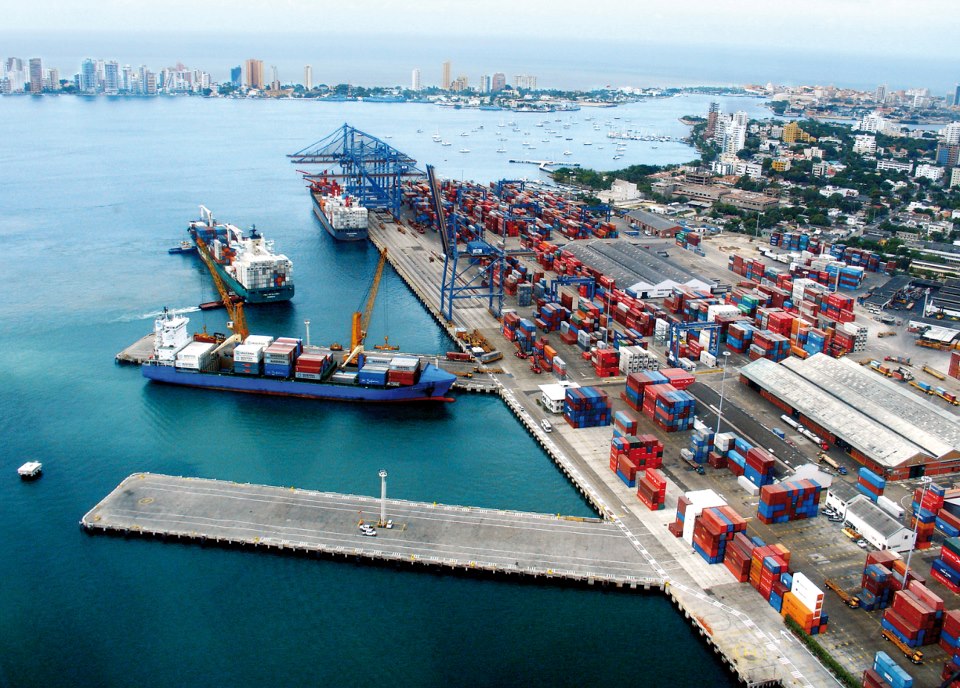
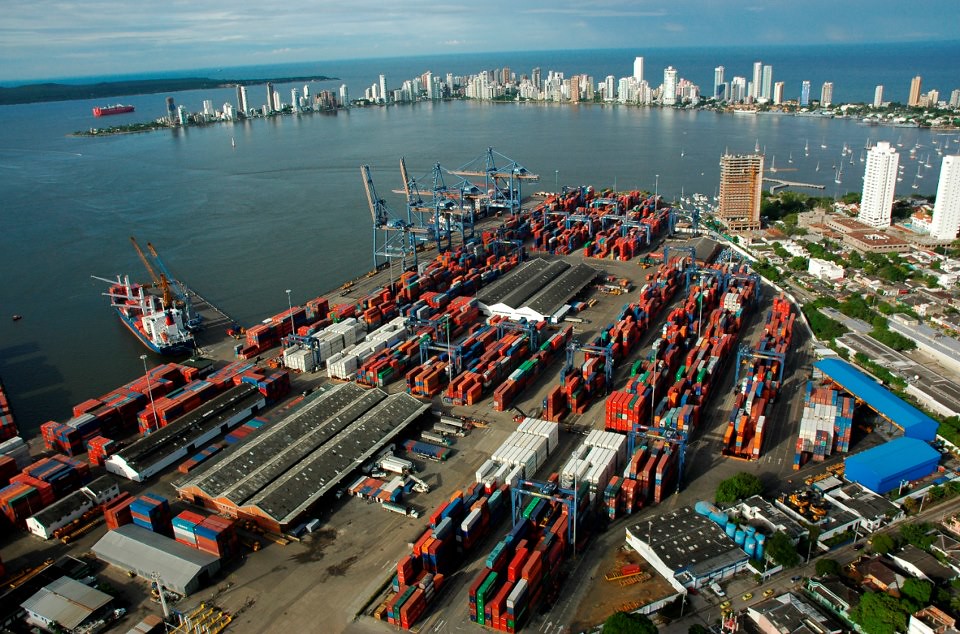
The Port of Cartagena is one of the largest ports in the country and ranks among the top five in Latin America; it is also considered one of the areas with the highest maritime connectivity, recognized for its high level of efficiency. Strategically located near the Panama Canal, it serves as a crucial link for global trade, connecting Colombia to international value chains and consolidating itself as the most important port cluster in the Caribbean. Socially, its significance lies in its role as a driver of job creation and regional development, although it is noted that this growth often reflects a structural tension between global economic interests and local demands for environmental justice.
In terms of operational capacity and impact, the port handled more than three million TEUs (20-foot containers) in 2024, utilizing modern infrastructure capable of receiving vessels of up to 14,000 TEUs. Its logistics network provides connectivity to more than 600 ports in 140 countries, and its economic activity contributes approximately 2% of Colombia’s national GDP, serving as a decisive pillar for the department of Bolívar. Regarding sustainability, the group manages a system of approximately 6,000 solar panels that generate 2.98 million kilowatt-hours per year; furthermore, during the deepening of the access channel, it successfully relocated 8,725 species.
However, port expansion also triggers critical environmental and social issues, characterized by high pollution risks due to deficient discharge control systems and weak contingency strategies. Specific environmental impacts include mangrove deforestation, sedimentation that alters energy flows within ecosystems, and a loss of biodiversity caused by industrial spills. On the social and legal fronts, serious conflicts have been documented regarding the lack of prior consultation with Afro-descendant communities, such as in the cases of La Boquilla and Tierra Bomba. This has directly affected the basic livelihood of artisanal fishers, who face restrictions on accessing their traditional fishing grounds and the deterioration of their economic sustenance.
Read more
University of Antwerp
Faculty of Law and Institute of Development Policy (IOB)
Stadscampus – Gebouw V
Venusstraat 23
2000 Antwerp, Belgium
Research sites
Follow us
ContainerHavens 2026 | Disclaimer | Privacy policy | Cookie policy