
Research site
Port of Antwerp-Bruges
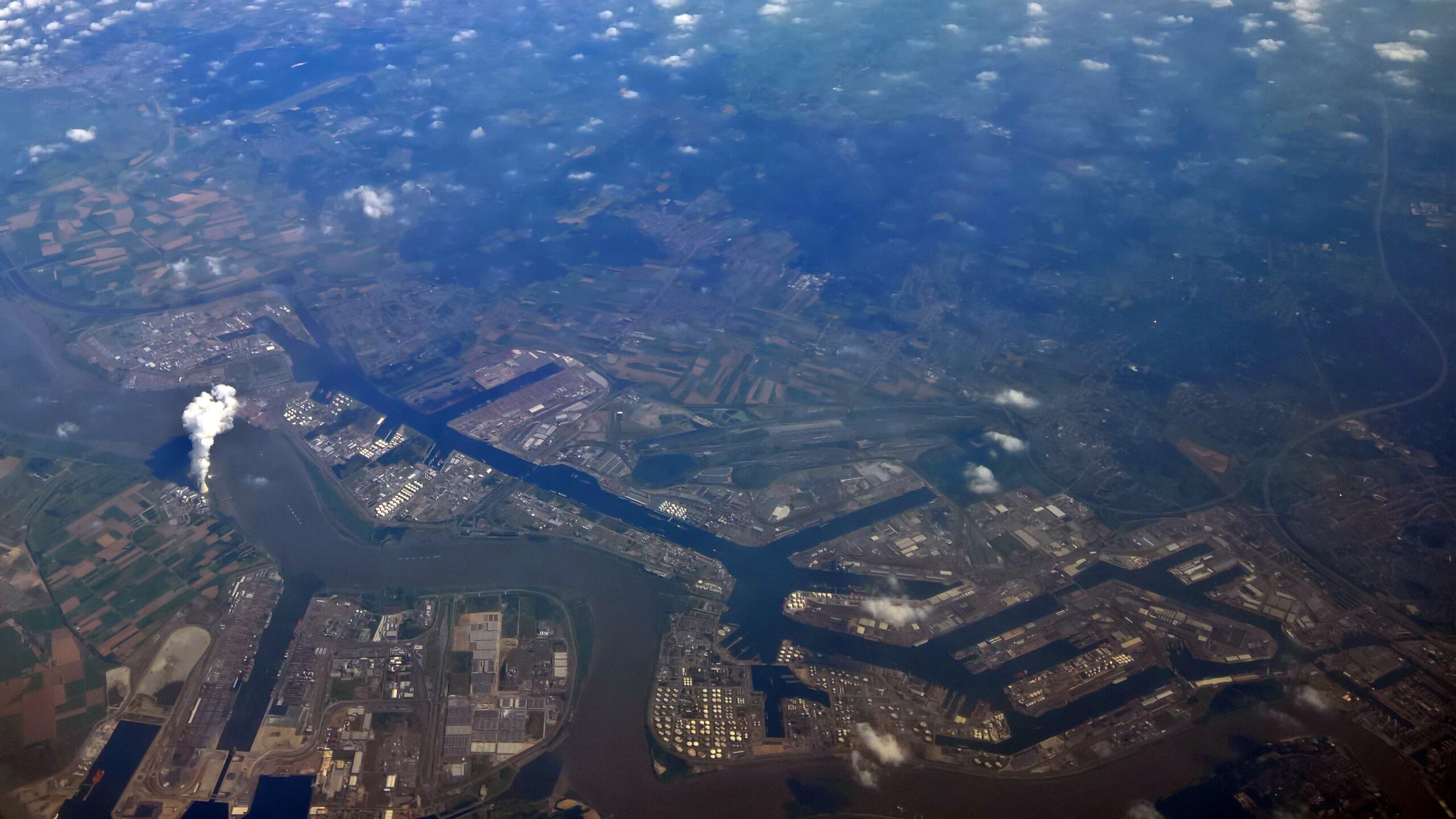
Antwerp-Bruges is Europe’s second largest port and second largest petrochemical hub in the world. It is also a place where local residents have been displaced, workers labour under very unequal conditions, and air, soil and water contamination has reached levels where cleanup is no longer technically feasible. ContainerHavens research in the Port of Antwerp-Bruges asks how and why, despite all of this, official narratives of inevitable growth and competitiveness continue to hold, and what it takes to contest them.
Antwerp-Bruges is Europe’s second largest port and second largest petrochemical hub in the world. It is also a place where local residents have been displaced, workers labour under very unequal conditions, and air, soil and water contamination has reached levels where cleanup is no longer technically feasible. ContainerHavens research in the Port of Antwerp-Bruges asks how and why, despite all of this, official narratives of inevitable growth and competitiveness continue to hold, and what it takes to contest them.
The Port of Antwerp-Bruges is one of Europe’s most important maritime gateways and is strategically located along the Scheldt River in Antwerp. Due to its location, it has become a center for international trade, logistics, and chemical production. Today, it forms part of the broader Port of Antwerp-Bruges, making it the second largest port in Europe spanning across 14,956 hectares. Ownership of the port is shared between the City of Antwerp (80.2%) and the City of Bruges (19.8%). Its inland location, 80 kilometers from the North Sea, and the dense network of rail, road, and inland waterway connections make it a key node that links the European hinterland to the larger global supply chains.
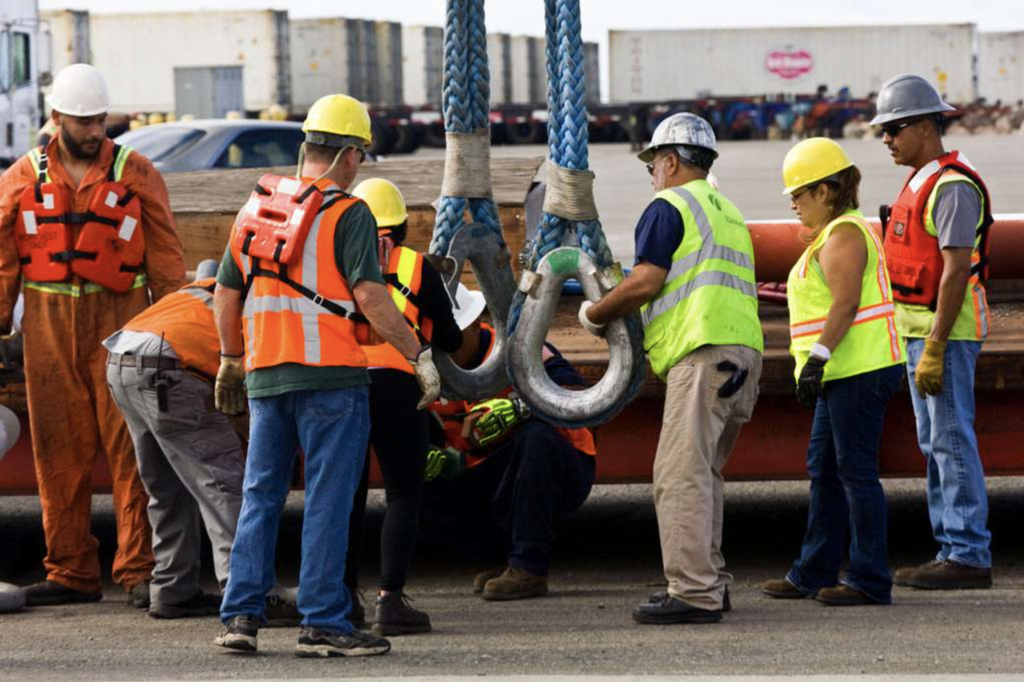
At the same time, the port’s scale and industrial activities generate uneven social and environmental outcomes. While, according to the statistics of the Port Authority, it creates approximately 161,533 direct, indirect and induced employment opportunities for both Belgians and non-Belgian workers, the port operates as much more than a transport hub. There are large industrial, logistics, and petrochemical clusters where manufacturing, processing, and value addition activities take place alongside cargo handling. These diverse activities are structured through a highly segmented labour system. Registered and unionised dock workers and logistics contingent coexist across the port with more precarious, non-unionised, and outsourced forms of labour in the surrounding industries and warehouses who often lack formal recognition in port labour regimes yet remain essential for port operations. As a result, the official metrics used to celebrate the port’s regional economic contributions obscure the reality on the ground. By keeping other workers who are logistically, socially, and operationally integrated into port operations external from port labour regimes, institutional actors continue to claim high employment standards for formally recognised “port workers” while ignoring the systemic vulnerability of the peripheral and invisible workers who keep the logistics chain moving.
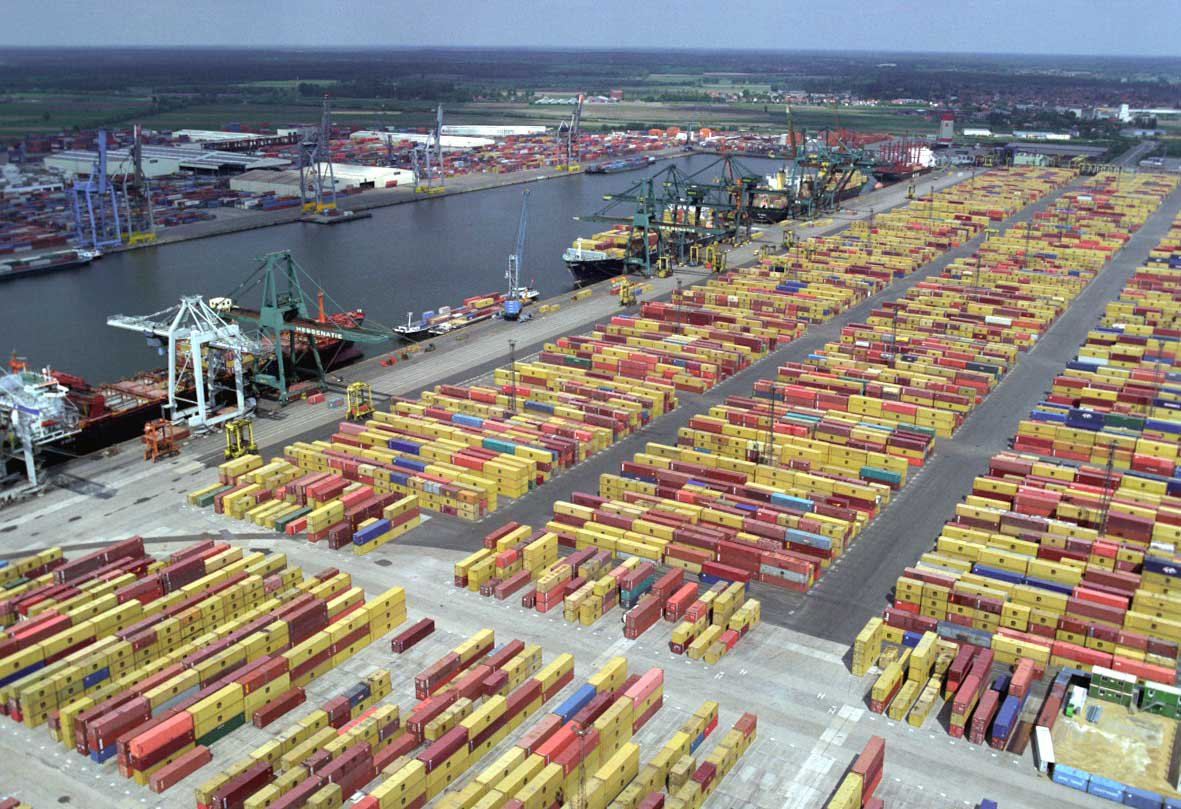
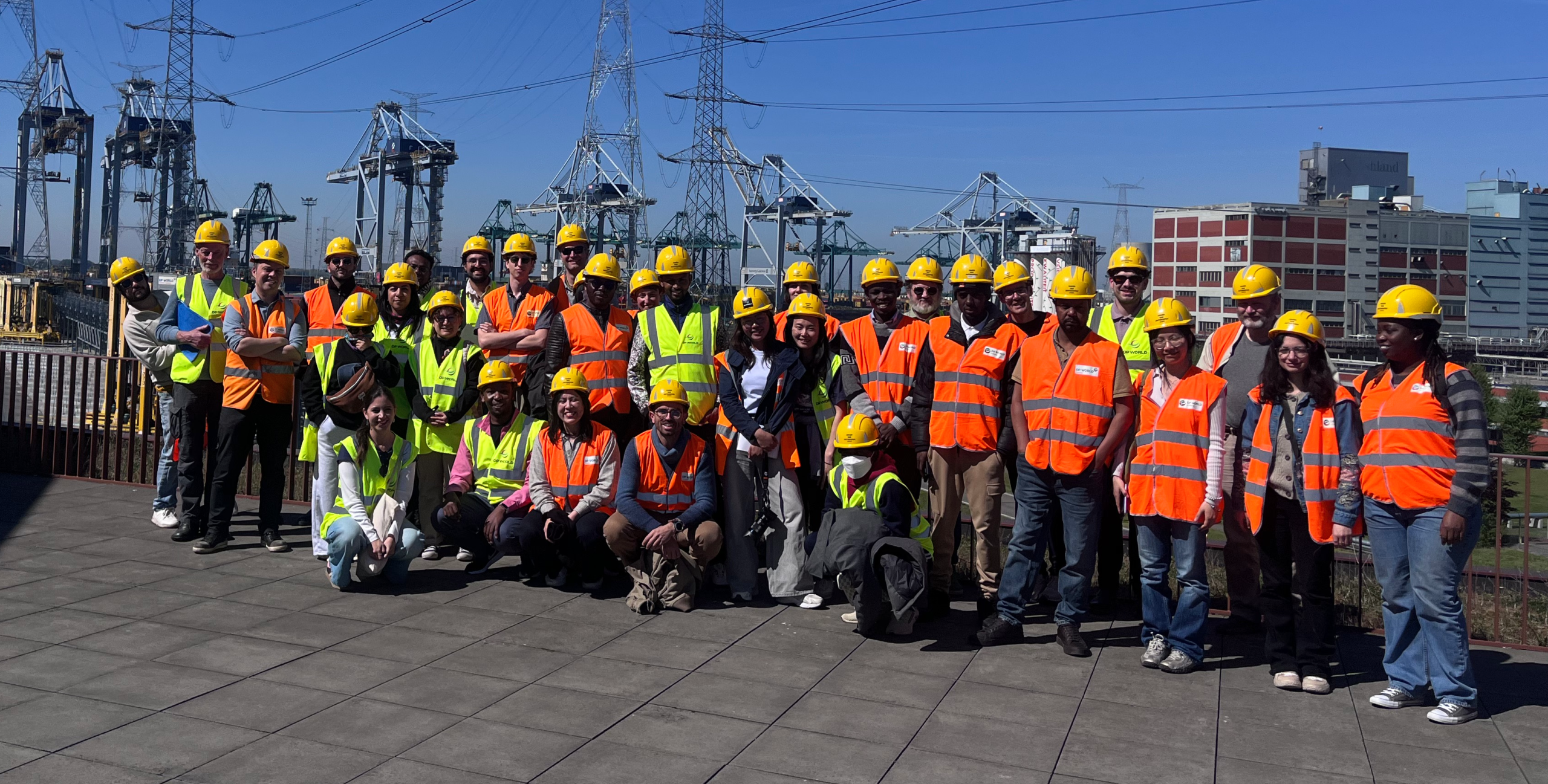
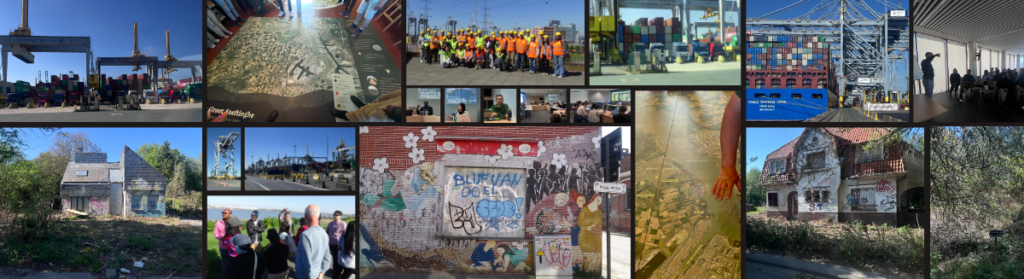
Historical and ongoing port expansion, infrastructure projects, and industrial development have reshaped surrounding landscapes, with significant impacts on local communities, natural ecosystems, and public health. These impacts and tensions emerged through archival research and fieldwork including interviews with port authority employees, NGOs, environmental activists, media actors, and citizen collectives, complemented by onsite observations.
Research findings point to a persistent gap between official narratives and lived experiences. While port expansion is frequently framed as inevitable and necessary for economic growth and competitiveness, for many residents, port expansion has meant displacement, expropriation, and the gradual erosion of local economies and social ties. The survival of villages and local communities around the port did not result from benign political decisions, but from sustained citizen resistance and mobilization, as illustrated by the case of Doel.
Doel
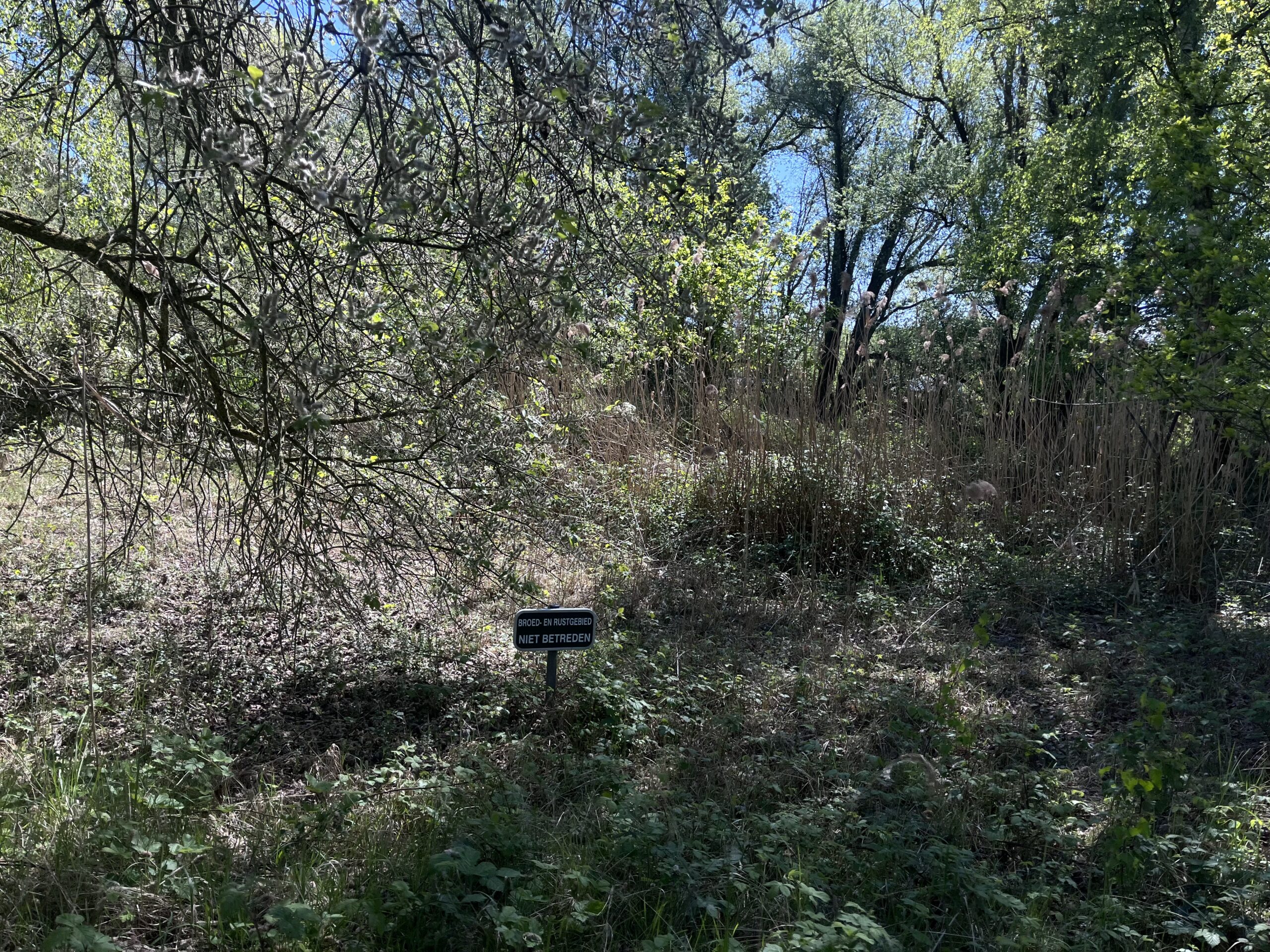
The village of Doel, situated on the edge of the port, has faced repeated threats of demolition since the 1960s as the port expanded and historic buildings were razed or left to decay. A compromise was only reached in 2022, after a 24-year legal battle. The village would be preserved, residents’ right to continue living there formally recognised, and port expansion plans adapted accordingly. The Flemish government has since announced plans to rebuild Doel as a “vibrant polder village,” with restoration of the historic centre expected by 2027. Whether this outcome represents a genuine reversal or a reframing of the same territorial logic – one where acknowledgement of harm coexists with its continuation – is one of the questions the ContainerHavens research pursues.
These socio-spatial dynamics are closely linked to a broader environmental framework in the Antwerp region. The area has experienced decades of intensive industrial activity. Regulatory zoning between port and industrial areas often fails to reflect how ecological impacts unfold in practice. Environmental assessment is based largely on calculations, estimates, and regulatory thresholds are set by permitting authorities, prioritizing regulatory compliance over cumulative or long-term environmental impacts. At the same time, the dense concentration of industrial activity, with many companies operating in close proximity, disperses responsibility for pollution and makes it difficult, in some cases, to attribute contamination to specific actors. As a result, for certain types of pollutants, contamination levels have reached a point where remediation is often technologically and financially unfeasible. This situation highlights the limits of both the “polluter pays” and “compensation” principles in practice.
Forever chemicals
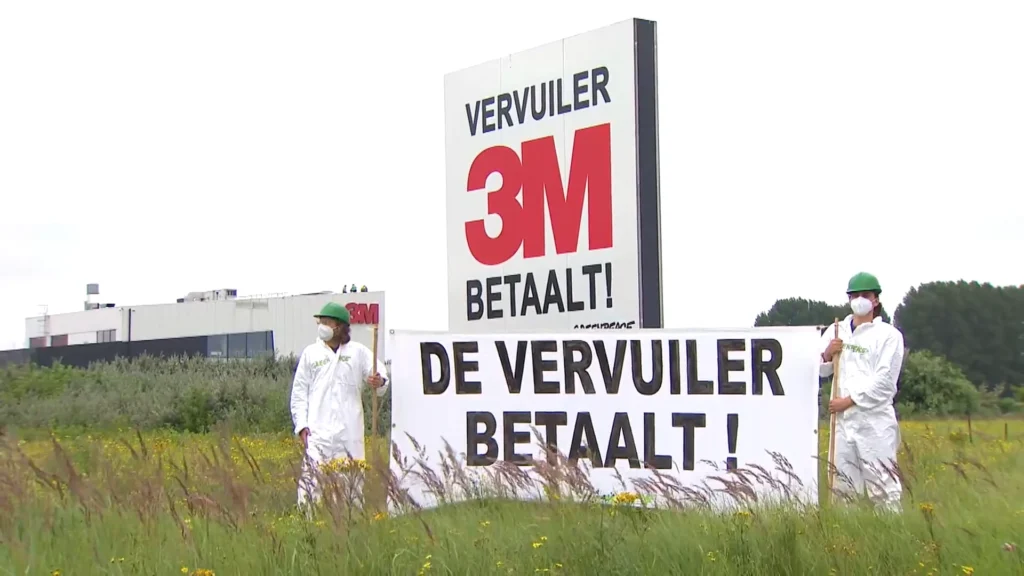
The contamination, traced to PFAS production at the Zwijndrecht plant dating back to the 1970s, came to public attention in 2021, when excavation work for the Oosterweel project major Antwerp ring road infrastructure project revealed heavily contaminated soil and groundwater in the surrounding area. A subsequent blood-testing campaign confirmed that hundreds of nearby residents had been exposed to very high concentrations of PFOS. 3M has since committed to a large-scale remediation operation under a 2022 agreement with local authorities, and ceased PFAS production at the plant in 2024. In February 2026, a landmark trial opened in Antwerp, with around 1,400 residents collectively seeking approximately 30 million euros in damages.
Environmental arguments have also been mobilised by different actors to justify competing territorial claims, including so-called environmental compensation projects linked to port expansion. Environmental litigation, meanwhile, places the burden of proof largely on citizens and NGOs. As seen in the 3M PFAS case, public authorities initially played a limited proactive role, with local residents and citizen groups instead organizing independent research and contamination testing. These initiatives have been crucial in exposing contamination and defending the right to information. Nonetheless, they also highlight the difficulties of establishing accountability for substances whose health effects may emerge years later, and whose causal pathways remain scientifically hard to prove.
The socio-economic divide guides the empirical work in Antwerp. The research investigates the tension between the Port Authority’s corporate narrative and the lived realities of an environmentally burdened, socially stratified workforce as well as surrounding residents and citizens affected by the port’s operation. Ultimately, the fieldwork asks who bears the bodily and environmental costs of Antwerp’s port activities and industrial expansion, and how the peripheral and invisibilised workers, along with affected residents, articulate claims of space and rights in a port regime that marginalises them. In doing so, it seeks to make visible the contradictions that structure the port’s operations expansion and the forms of resistance or negotiation that emerge within them.

Antwerp-Bruges is Europe’s second largest port and second largest petrochemical hub in the world. It is also a place where local residents have been displaced, workers labour under very unequal conditions, and air, soil and water contamination has reached levels where cleanup is no longer technically feasible. ContainerHavens research in the Port of Antwerp-Bruges asks how and why, despite all of this, official narratives of inevitable growth and competitiveness continue to hold, and what it takes to contest them.
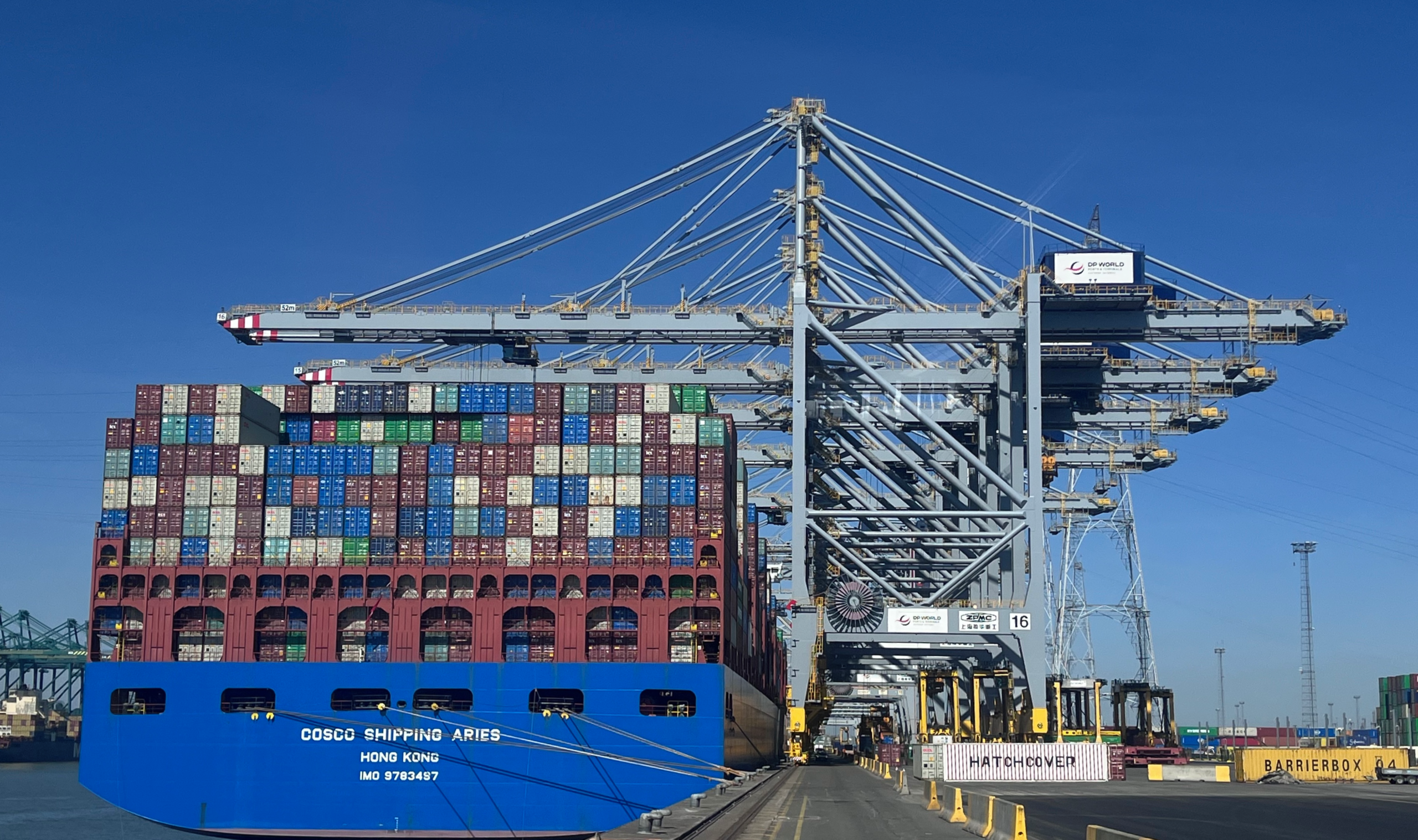
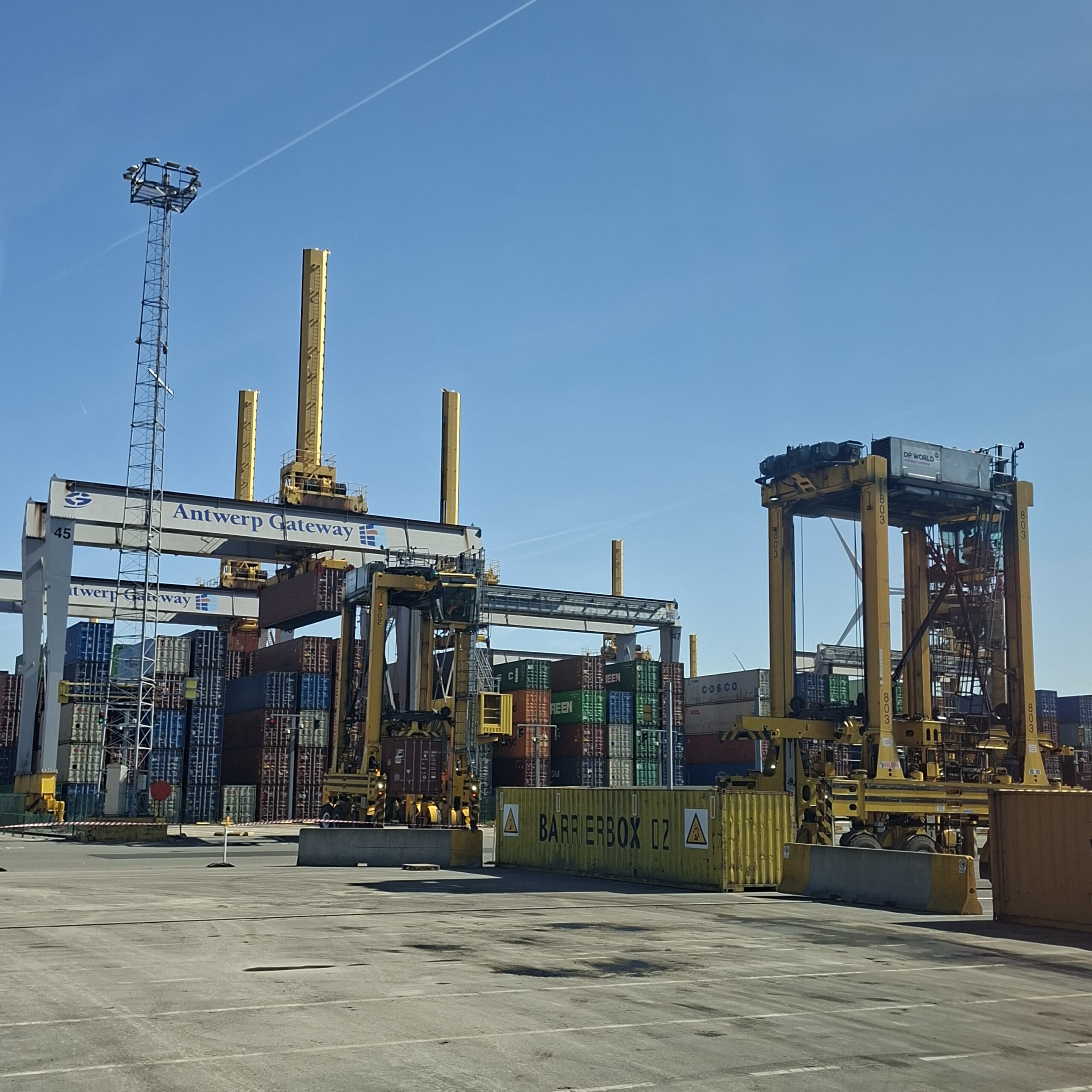
The Port of Antwerp-Bruges is one of Europe’s most important maritime gateways and is strategically located along the Scheldt River in Antwerp. Due to its location, it has become a center for international trade, logistics, and chemical production. Today, it forms part of the broader Port of Antwerp-Bruges, making it the second largest port in Europe spanning across 14,956 hectares. Ownership of the port is shared between the City of Antwerp (80.2%) and the City of Bruges (19.8%). Its inland location, 80 kilometers from the North Sea, and the dense network of rail, road, and inland waterway connections make it a key node that links the European hinterland to the larger global supply chains.
At the same time, the port’s scale and industrial activities generate uneven social and environmental outcomes. While, according to the statistics of the Port Authority, it creates approximately 161,533 direct, indirect and induced employment opportunities for both Belgians and non-Belgian workers, the port operates as much more than a transport hub. There are large industrial, logistics, and petrochemical clusters where manufacturing, processing, and value addition activities take place alongside cargo handling. These diverse activities are structured through a highly segmented labour system. Registered and unionised dock workers and logistics contingent coexist across the port with more precarious, non-unionised, and outsourced forms of labour in the surrounding industries and warehouses who often lack formal recognition in port labour regimes yet remain essential for port operations. As a result, the official metrics used to celebrate the port’s regional economic contributions obscure the reality on the ground. By keeping other workers who are logistically, socially, and operationally integrated into port operations external from port labour regimes, institutional actors continue to claim high employment standards for formally recognised “port workers” while ignoring the systemic vulnerability of the peripheral and invisible workers who keep the logistics chain moving.
Historical and ongoing port expansion, infrastructure projects, and industrial development have reshaped surrounding landscapes, with significant impacts on local communities, natural ecosystems, and public health. These impacts and tensions emerged through archival research and fieldwork including interviews with port authority employees, NGOs, environmental activists, media actors, and citizen collectives, complemented by onsite observations.
Research findings point to a persistent gap between official narratives and lived experiences. While port expansion is frequently framed as inevitable and necessary for economic growth and competitiveness, for many residents, port expansion has meant displacement, expropriation, and the gradual erosion of local economies and social ties. The survival of villages and local communities around the port did not result from benign political decisions, but from sustained citizen resistance and mobilization, as illustrated by the case of Doel.
Doel
The village of Doel, situated on the edge of the port, has faced repeated threats of demolition since the 1960s as the port expanded and historic buildings were razed or left to decay. A compromise was only reached in 2022, after a 24-year legal battle. The village would be preserved, residents’ right to continue living there formally recognised, and port expansion plans adapted accordingly. The Flemish government has since announced plans to rebuild Doel as a “vibrant polder village,” with restoration of the historic centre expected by 2027. Whether this outcome represents a genuine reversal or a reframing of the same territorial logic – one where acknowledgement of harm coexists with its continuation – is one of the questions the ContainerHavens research pursues.
These socio-spatial dynamics are closely linked to a broader environmental framework in the Antwerp region. The area has experienced decades of intensive industrial activity. Regulatory zoning between port and industrial areas often fails to reflect how ecological impacts unfold in practice. Environmental assessment is based largely on calculations, estimates, and regulatory thresholds are set by permitting authorities, prioritizing regulatory compliance over cumulative or long-term environmental impacts. At the same time, the dense concentration of industrial activity, with many companies operating in close proximity, disperses responsibility for pollution and makes it difficult, in some cases, to attribute contamination to specific actors. As a result, for certain types of pollutants, contamination levels have reached a point where remediation is often technologically and financially unfeasible. This situation highlights the limits of both the “polluter pays” and “compensation” principles in practice.
Forever chemicals
The contamination, traced to PFAS production at the Zwijndrecht plant dating back to the 1970s, came to public attention in 2021, when excavation work for the Oosterweel project major Antwerp ring road infrastructure project revealed heavily contaminated soil and groundwater in the surrounding area. A subsequent blood-testing campaign confirmed that hundreds of nearby residents had been exposed to very high concentrations of PFOS. 3M has since committed to a large-scale remediation operation under a 2022 agreement with local authorities, and ceased PFAS production at the plant in 2024. In February 2026, a landmark trial opened in Antwerp, with around 1,400 residents collectively seeking approximately 30 million euros in damages.
Environmental arguments have also been mobilised by different actors to justify competing territorial claims, including so-called environmental compensation projects linked to port expansion. Environmental litigation, meanwhile, places the burden of proof largely on citizens and NGOs. As seen in the 3M PFAS case, public authorities initially played a limited proactive role, with local residents and citizen groups instead organizing independent research and contamination testing. These initiatives have been crucial in exposing contamination and defending the right to information. Nonetheless, they also highlight the difficulties of establishing accountability for substances whose health effects may emerge years later, and whose causal pathways remain scientifically hard to prove.
The socio-economic divide guides the empirical work in Antwerp. The research investigates the tension between the Port Authority’s corporate narrative and the lived realities of an environmentally burdened, socially stratified workforce as well as surrounding residents and citizens affected by the port’s operation. Ultimately, the fieldwork asks who bears the bodily and environmental costs of Antwerp’s port activities and industrial expansion, and how the peripheral and invisibilised workers, along with affected residents, articulate claims of space and rights in a port regime that marginalises them. In doing so, it seeks to make visible the contradictions that structure the port’s operations expansion and the forms of resistance or negotiation that emerge within them.
Latest updates on the Port of Antwerp-Bruges
Doel and the Price of Port Expansion
The Scheldt and the Port of Antwerp-Bruges in 2016. Doel sits on the left bank…
The automated port: Efficiency for whom?
Tugboat crews on strike in Rotterdam, 4 September 1979, marching behind a banner reading “Het…
The port is everywhere, but nowhere in court: PFAS, Antwerp, and the question of accountability
Construction of a tunnel under the Scheldt river, part of the Oosterweel ring road project….
The (Il)logic of Port Competitiveness: Labour, Environment and Community Struggles in Antwerp and Beyond
The (il)logic driving container port competitiveness across the world is consistent: growth is pursued at all costs, operations are increasingly concentrated and fragile, and the…
Workshop: Contestation and Resistance in Ports
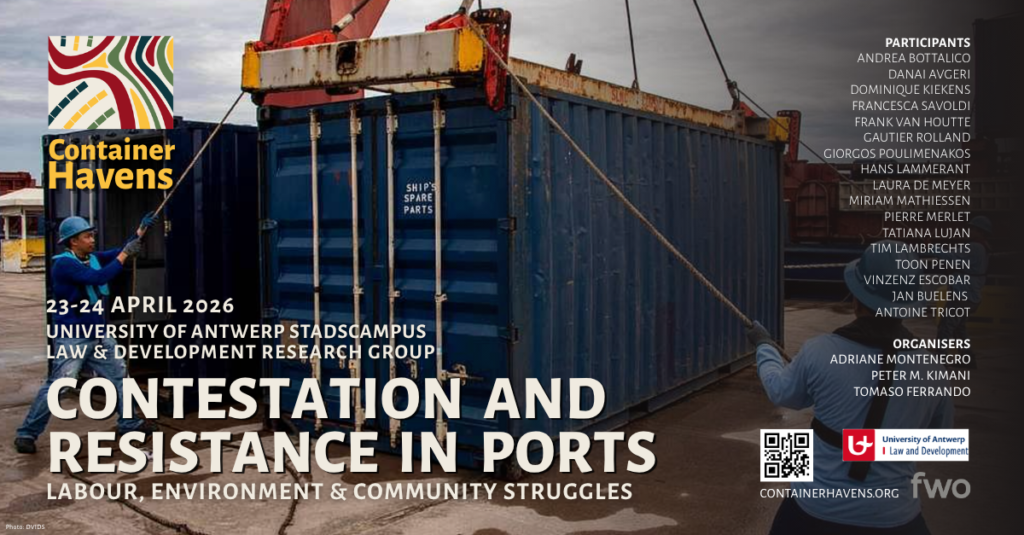
On 23–24 April 2026, ContainerHavens hosts its first workshop at the University of Antwerp Stadscampus….
University of Antwerp
Faculty of Law and Institute of Development Policy (IOB)
Stadscampus – Gebouw V
Venusstraat 23
2000 Antwerp, Belgium
Research sites
Follow us
ContainerHavens 2026 | Disclaimer | Privacy policy | Cookie policy