
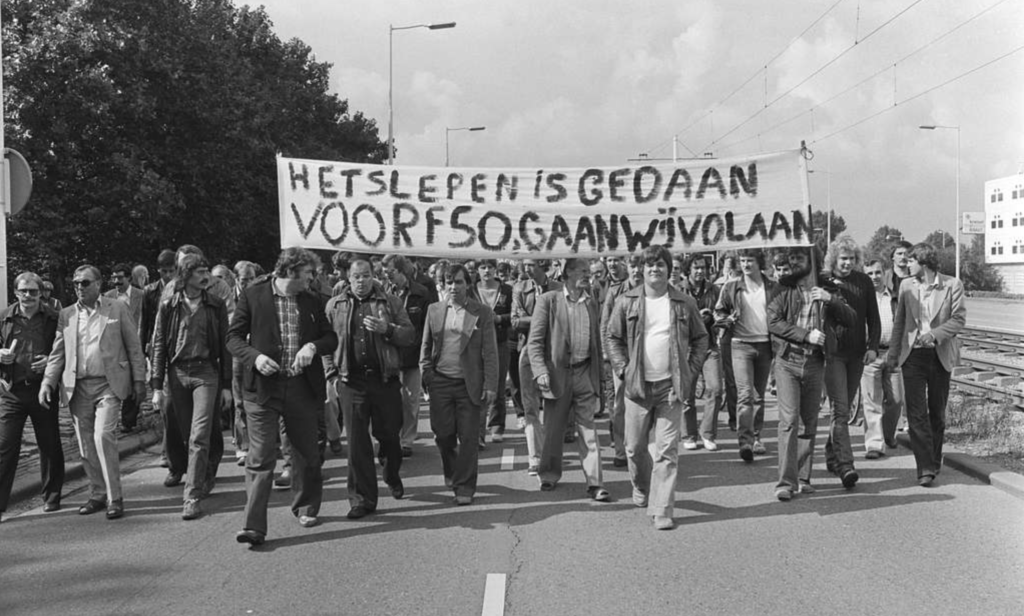
Port work has historically been labour intensive. Before the widespread adoption of containers, most cargo, except liquid and dry bulk, was handled as break-bulk, and (un)loaded piece by piece.1 This process was often labour-intensive, slow, and prone to cargo damage and workers’ injuries.
Containerisation in the 1960s revolutionised cargo handling and intermodal logistics.2 New infrastructure, like the gantry cranes that lifted and moved containers, transformed cargo operations. Standardised containers cut loading times, increased reliability, reduced costs, and let cargo move easily between ships, trucks, and railways. The Port of Antwerp was among the first in Europe to adopt large-scale containerized handling.3
As Bonacich and Wilson describe in their book on Getting the Goods: Ports, Labor, and the Logistics Revolution, containerisation increased productivity by at least a factor of ten, sharply reducing the time required to (un)load ships.4 Technological change was accompanied by changes in labour organisation. Around the same period, terminal operators in Antwerp struggled to attract dock workers because the work was casual and precarious.5
Today’s push towards automation can be understood as the latest phase in this long history of pursuing efficiency through technological and organisational innovation. Ports worldwide are being reimagined as smart infrastructures, with automation, AI, and digital logistics systems promoted as solving two problems at once: efficiency and decarbonisation.6 For port authorities and terminal operators, automation promises faster cargo handling, improved productivity, and reduced labour costs per container.7
This blog post argues that automation is better understood as a contested political process. The question is not whether automation increases efficiency, but efficiency for whom, and at what expense.
The modernisation of the Port of Antwerp’s job assignment system
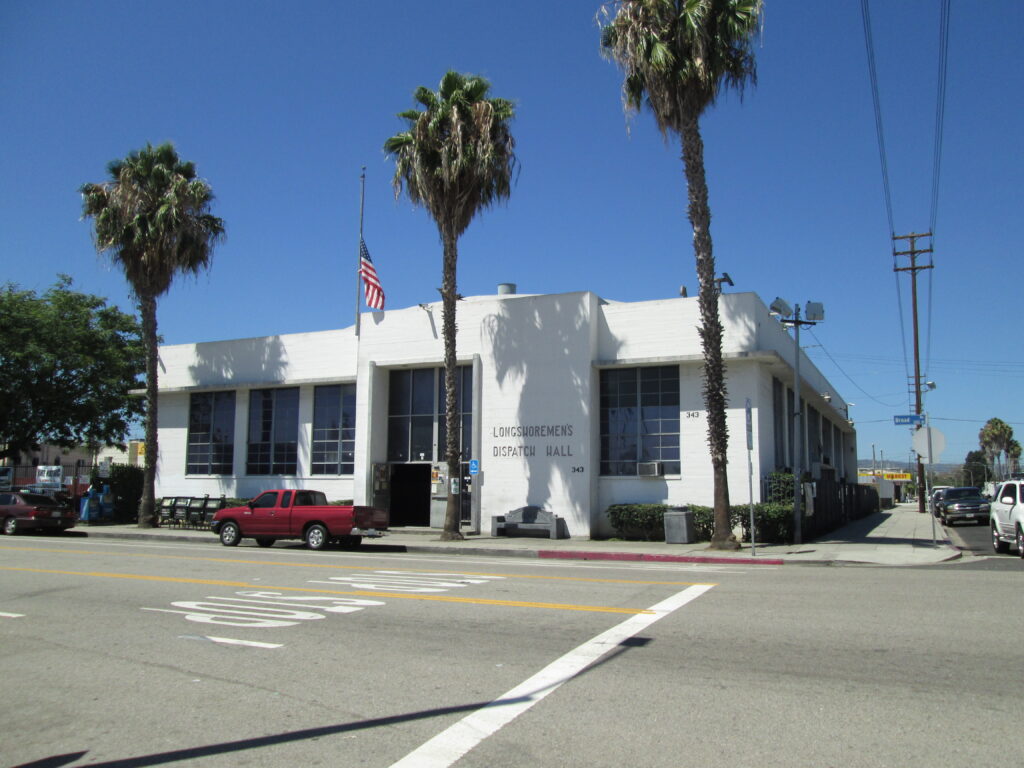
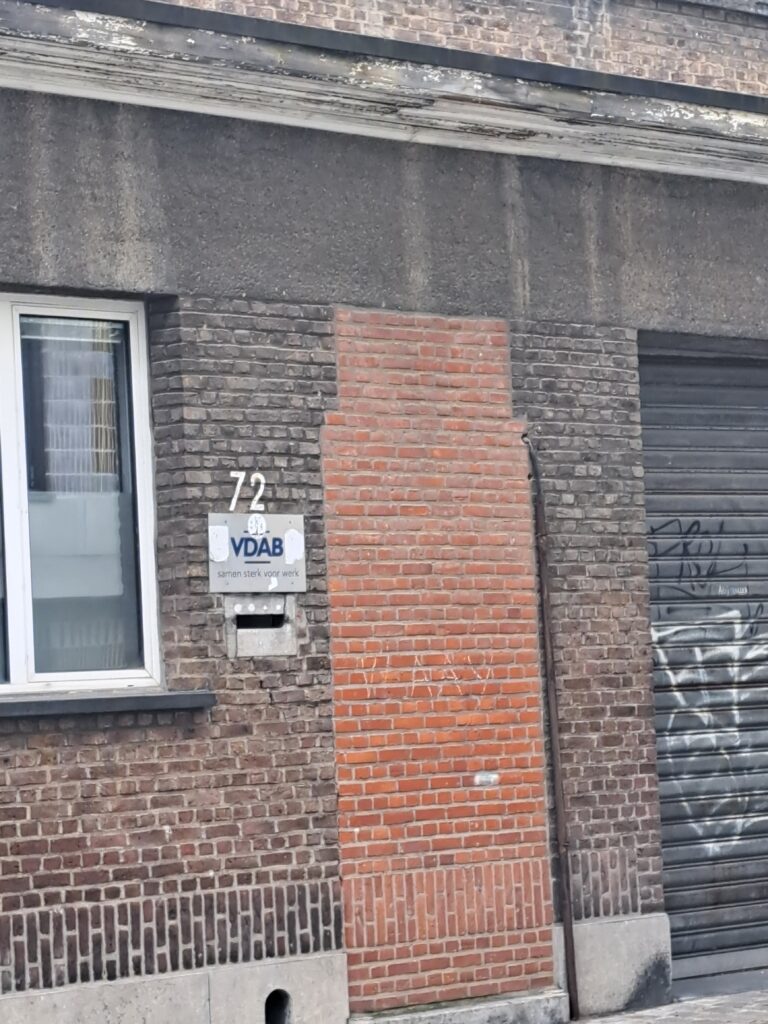
These questions were at the centre of a ContainerHavens workshop at the University of Antwerp in April 2026, where Session 1, focused on labour, sustainability, and technology, brought together researchers, lawyers, and engaged citizens. One example discussed was the modernisation of Antwerp’s job assignment system. Traditionally, port workers were dispatched through a physical hiring hall. Today, assignments are largely managed through electronic systems, leaving the hiring hall building standing only as a reminder of how technology transforms the social and organisational arrangements through which labour is coordinated.
A distinction surfaced throughout the discussions: the difference between what can be automated and what is socially desirable to automate. The first is largely a corporate decision driven by technological capability and investment.8 The second raises a broader question about social value, worker wellbeing, democratic participation and the distribution of risks and benefits.9
These questions often collapse into one. Once automation is framed as technically possible and economically efficient, it is frequently assumed to be socially desirable as well. Yet port automation projects across the world have proven that this is far from self-evident.
The limits of automation
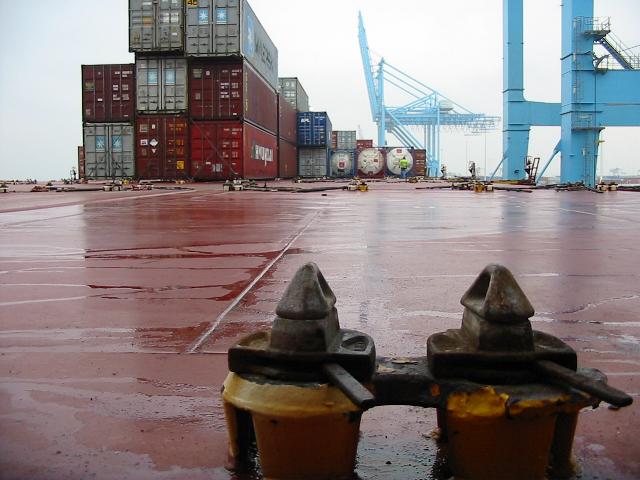
Vinzenz Baumer Escobar, researcher at the Erasmus University Rotterdam, brought this distinction into focus through his own experience as a twist-lock handler in the Port of Rotterdam. Twist locks are the metal devices that secure shipping containers during transport. Removing and installing them requires workers to operate in close proximity to moving containers and heavy equipment.
Despite decades of technological development, this work has stayed stubbornly manual. As the workshop discussions highlighted, the limits of automation are simultaneously physical, economic, and socio-cultural.
Automation tends to be undertaken so far as profitability allows. Once the cost of replacing a worker outweighs the gains, investment in automation slows. But the point where automation stops being profitable is not necessarily the point where it ceases to be socially desirable. One workshop participant from the port sector noted that a fully automated port can be less productive than a partially automated one, challenging the assumption that automation necessarily leads to greater efficiency.
Automation also creates a new form of dependency. Once a terminal is fully automated, it becomes locked in a path of continuous upgrading and maintenance. This raises important questions about whether the gains of automation justify the financial and social costs of replacing workers or intensifying labour demands for those who stay.
The work that resists automation is generally characterised by insecurity. Student contracts, flexible contracts, and fragmented employment arrangements are common in many parts of the logistics chain. Precarity is not a future risk that automation might create; for many port workers, it is already the present.
Who is at the table when automation is negotiated
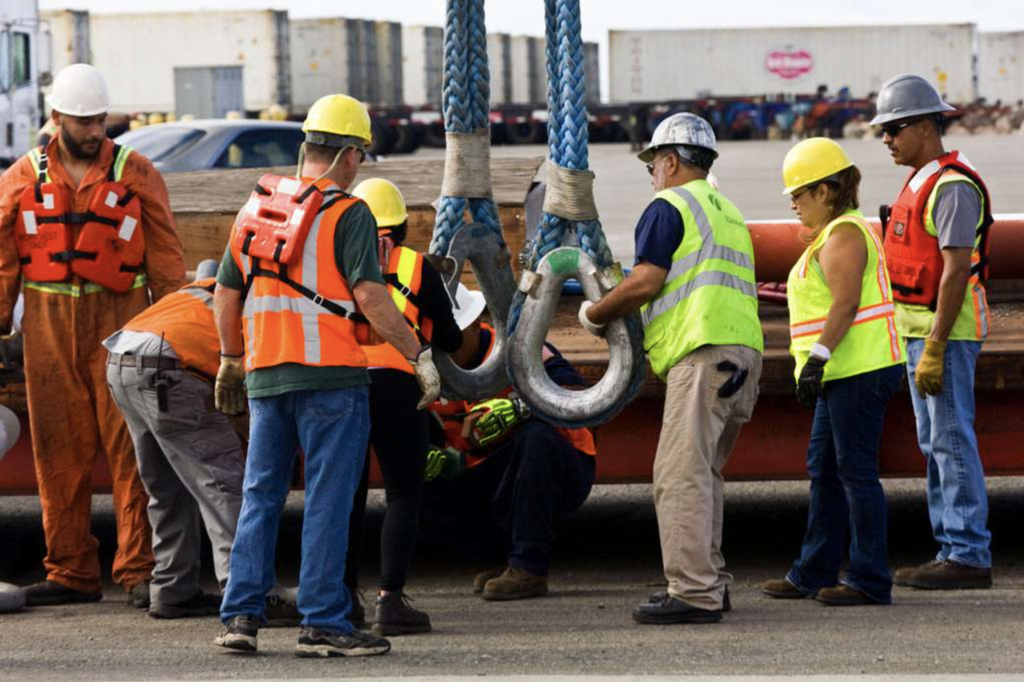
Public debates about port automation often focus on formally recognised port workers, and legal frameworks reinforce this. For example, the ILO’s Convention on Dock Work Convention, 1973 (No. 137) which addresses the social consequences of new cargo handling methods in ports, calls for registering dock workers and emphasises cooperation between workers or their unions, employers or their organisation, and public authorities in addressing changes affecting port labour.
Within many national port labour regimes, dock workers are typically legally defined, unionised, and can assert some degree of collective bargaining power. In Belgium, the 1972 Major Act provides that only registered port workers can perform port work in designated areas.10 As a result, recognised port workers are often the primary actors considered in discussions about port automation and technological change.
But ContainerHavens fieldwork across five of the world’s largest container ports suggests that this framing only captures a segment of contemporary port workforce.
Seafarers, seafarer welfare-centre volunteers, truck drivers, warehouse and distribution center workers, railroad workers, maintenance crews and other casual workers across the port as well as workers in industries co-located with port terminals all contribute to port operations, all keep a port running, yet most fall outside the formal definition of ‘port worker’ and are largely invisible in negotiations over technological change and labour negotiations.11
As Peter Mbogo Kimani argues in his blog post Ports are not edges, ports cannot be understood solely through the lens of recognised port workers. Rather, they are sustained by a wider network of port-centric workers whose labour extends beyond the port gate but remains essential to port operations. This is echoed by some scholars who argue that port expansions affect the livelihoods and working conditions of not only the people that are directly employed by the port but also those whose “labour port operations depend on.”12
This has important implications for automation. The workers most exposed to the consequences of increasingly integrated and data-driven logistics systems are often least represented in formal negotiations. They may experience the pressures of automation while remaining absent from the institutions where decisions about technological change are made.
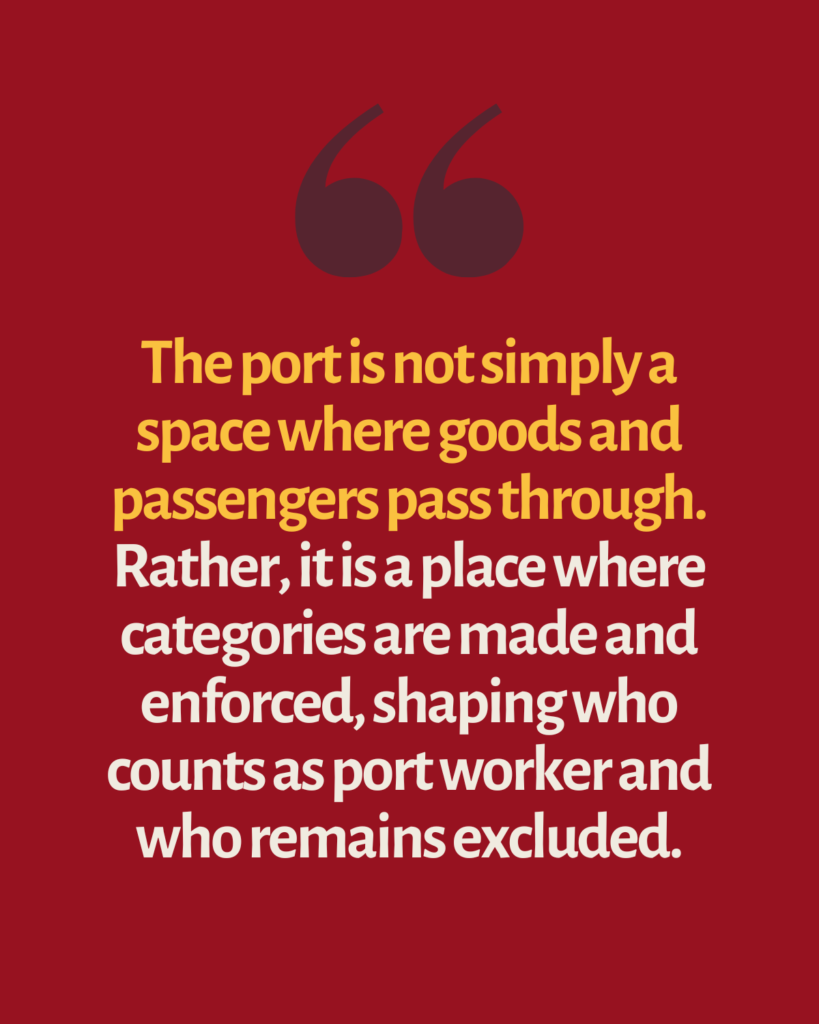
Understanding who is included or excluded in debates about automation is as important as the technology itself.
Workers are not passive
Much of the literature on automation depicts it as a one-way process: technological change is imposed and workers simply adapt. But workshop discussions and fieldwork in Antwerp challenged this assumption.
Labour geography reminds us that workers are not passive recipients of automation and technology. Workers, just like capital, also shape the economic landscape through their own spatial and political action.13 They contest automation and technological developments, negotiate the terms under which new technologies are introduced, and seek to influence how the benefits and costs of technological change are distributed.14
During my fieldwork in Antwerp, one union official described exactly this kind of leverage:
“If a company wants to try something, they want to implement something new, they have to tell us [workers union] what it is. We’ll come and take a look at it… Of course, if they simplify a certain job, then we are gonna have to take a look at it… And they need to give us at least six months’ time to take a look at it. And then we can also say, no, we’re not going to do that, which has happened in the past. We’ve set up certain technologies now we are not going to implement that… That is one of the powers we have here.”
Decisions about technology, then, are also decisions about power, employment, and the future of work. Ports have long been sites where technological transitions are negotiated rather than simply imposed. The future of automation remains open precisely because workers keep intervening in how technology is implemented.
Back to the research question
This returns us to the ContainerHavens Project’s research question: are labour struggles reshaping the legal and economic architecture that organise ports, or are they constrained by them?
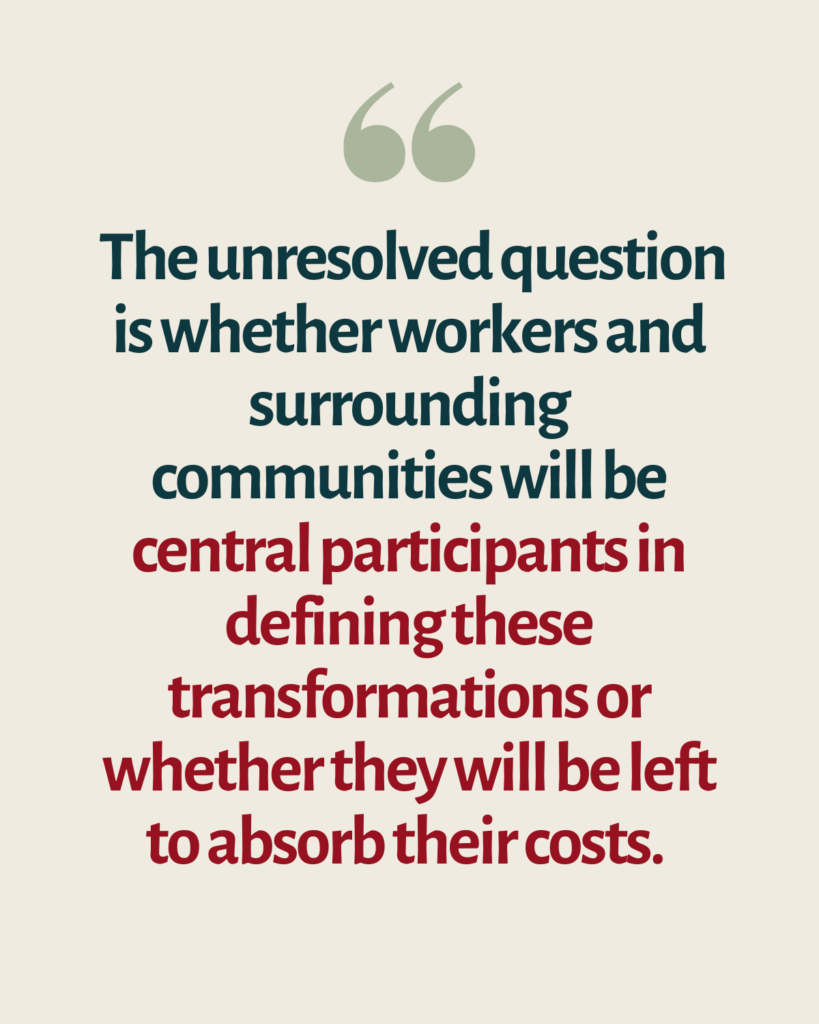
Automation provides a live test case. The transition is already underway. New technologies are being introduced, logistics systems are becoming increasingly integrated, and decisions are being made in the present. The unresolved question is whether workers and surrounding communities will be central participants in defining these transformations or whether they will be left to absorb their costs.
The future of the smart port depends not only on technological capabilities but also on whose voices are recognised, whose interests are prioritised, and how the benefits and costs of efficiency are distributed across the wider network of workers who sustain port operations.
Learn more
- Research site overview: Antwerp-Bruges Port
- Blog post: The port is everywhere, but nowhere in court: PFAS, Antwerp, and the question of accountability
- Follow ContainerHavens on LinkedIn for further updates
About the author

Peter Mbogo Kimani
Peter Mbogo Kimani is a PhD researcher under the ContainerHavens Project in the Law and Development Research Group at University of Antwerp, Belgium under the supervision of Prof Tomaso Ferrando. His PhD research examines how legal, spatial, and institutional frameworks shape port labour and worker identity in the context of port transformation, automation, and environmental governance. Drawing on socio-legal methods, his work focuses on the Port of Antwerp, Shanghai and the San Pedro Bay Port Complex, combining legal analysis with interviews and participant observation. Peter is also an Advocate of the High Court of Kenya.
End notes
- Theo Notteboom, ‘Thirty-Five Years of Containerization in Antwerp and Rotterdam: Structural Changes in the Container Handling Market’ Struggling for Leadership: Antwerp-Rotterdam Port Competition between 1870-2000 (1st edn, Springer-Verlag Berlin Heidelberg 2003) 117.
- Ibid
- Ibid 118.
- Edna Bonacich and Jake B Wilson, Getting the Goods – Port, Labour, and the Logistics Revolution (1st edn, Cornell University Press 2008) 52.
- Stephan Vanfraechem, ‘“Much Ado about Nothing?” Reorganising the Hirig System and Decasualization in the Port of Antwerp during the 1960s: Motives, Obstacles, Outcome’ Struggling for Leadership: Antwerp-Rotterdam Port Competition between 1870-2000 (1st edn, Springer-Verlag Berlin Heidelberg 2003) 271.
- Panagiotis Tsagkaris and Tatiana P Moschovou, ‘The Impact of Automation on the Efficiency of Port Container Terminals’ (2025) 5 Future Transportation 155, 2 <https://doi.org/10.3390/futuretransp5040155>.
- Theo Notteboom and Francesco Vitellaro, ‘The Impact of Innovation on Dock Labour: Evidence from European Ports’ 6.
- Langdon Winner, The Whale and the Reactor – A Search for Limits in an Age of High Technology (1st edn, University of Chicago Press 1986) 27–28 <https://sciencepolicy.colorado.edu/students/envs_5110/whale_reactor.pdf> accessed 20 June 2026.
- Theo Notteboom, ‘The Impact of Changing Market Requirements on Dock Labour Employment Systems in Northwest European Seaports’ (2018) 10 INTERNATIONAL JOURNAL OF SHIPPING AND TRANSPORT LOGISTICS 429, 443 <https://doi.org/10.1504/IJSTL.2018.10014642>.
- Ibid.
- Elizabeth A Sowers, Paul S Ciccantell and David A Smith, ‘Labour and Social Movements’ Strategic Usage of the Global Commodity Chain Structure’ Choke Points: Logistics Workers Disrupting the Global Supply Chain (1st edn, Pluto Press 2018) 23.
- Bai Ruixue and Loong Yu, ‘Worker Militancy and Strikes in China’s Docks’ Choke Points: Logistics Workers Disrupting the Global Supply Chain (1st edn, Pluto Press 2018) 67.
- Andrew Herod, Labor Geographies: Workers and the Landscapes of Capitalism (1st edn, The Guilford Press 2001) 35.
- Edna Bonacich and Jake B Wilson, Getting the Goods – Port, Labour, and the Logistics Revolution (1st edn, Cornell University Press 2008) 195.
University of Antwerp
Faculty of Law and Institute of Development Policy (IOB)
Stadscampus – Gebouw V
Venusstraat 23
2000 Antwerp, Belgium
Research sites
Follow us
ContainerHavens 2026 | Disclaimer | Privacy policy | Cookie policy