
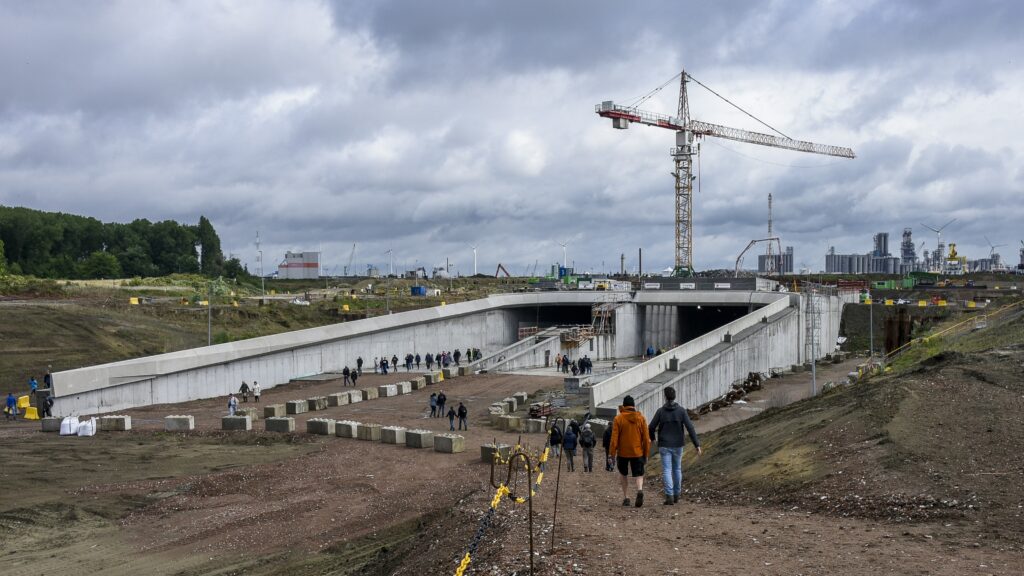
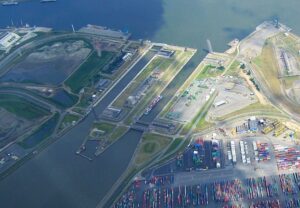
In 2017, Frank Van Houtte was trying to protect a nature reserve near his home in Boom, in the Rupel valley south of Antwerp, from a plan to dump 4.5 million cubic metres of construction soil into it. The soil was coming from Oosterweel, a major infrastructure project on the port of Antwerp-Bruges’s left bank designed to extend the city’s ring road to better accommodate the traffic generated by the port operations.
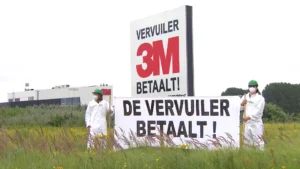
When Van Houtte and his colleagues at Red Onze Kleiputten requested the soil reports, they found alarming levels of PFAS, also known as “forever chemicals”. The source was 3M’s chemical plant in Zwijndrecht, which had been discharging these substances since 1974 into the surrounding soil, air and water.
“It took time to get those reports,” he recalls. “They knew we were looking, and they didn’t want to share them.” Within days of the story finally breaking in April 2021, a parliamentary investigation committee was announced.
3M has since ceased PFAS production in Zwijndrecht, which is a significant outcome of sustained citizen and legal pressure. Yet, other companies continue to pose risks to public health and ecosystems. As recently as 2025, Indaver, a waste processing company operating inside the port area, applied for a permit to discharge TFA, an ultra-short-chain PFAS recently detected in Flemish drinking water, into a Scheldt already exceeding environmental quality standards for PFOS, one of the most harmful compounds in the PFAS family.
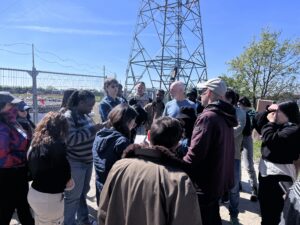
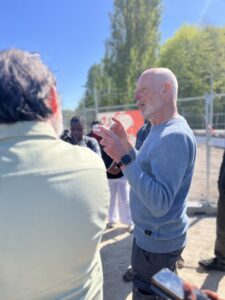
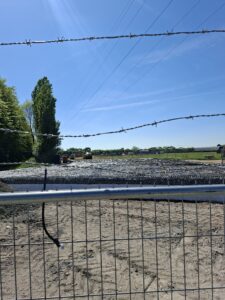
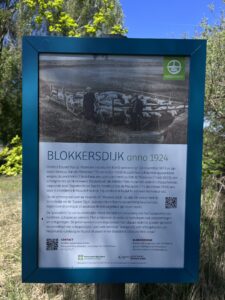
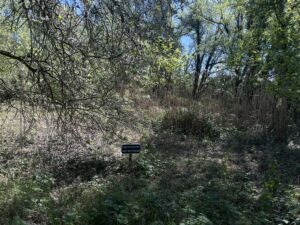
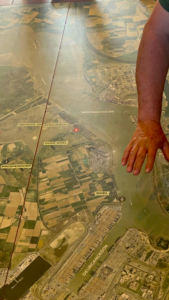
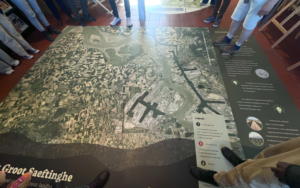
During a field visit organised as part of a ContainerHavens workshop in April 2026, participants visited Blokkersdijk, a protected wetland reserve on the left bank of the Scheldt, directly adjacent to 3M’s plant. It was here that researchers at the University of Antwerp first detected the contamination in wildlife: PFAS concentrations in the eggs of birds nesting in the reserve averaged 20 ng/g in 2011, among the highest ever recorded in wild birds. In 2024, concentration levels had nearly doubled, reaching almost 40 ng/g.
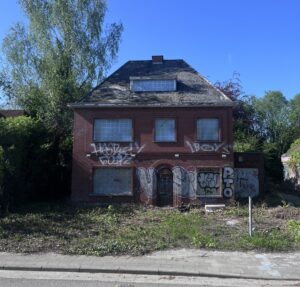
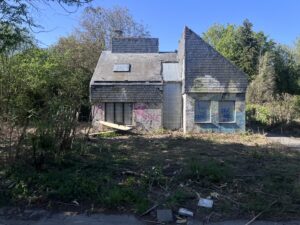
Across most of Zwijndrecht, the contaminated upper layers of residential soil are being excavated. Farms and gardens are being dug up, and residents’ daily lives are being disrupted. The operation is also insufficient: PFAS does not stop at the surface. It has irreversibly migrated into deeper soil layers, groundwater, air, and the Scheldt.

Toon Penen, a lifelong inhabitant of the village and member of citizen collective Grondrecht, is living through this. In January 2023, Grondrecht joined Greenpeace Belgium and Bond Beter Leefmilieu in filing as civil parties in the criminal case against 3M. Blood tests had by then shown that in 92.7% of residents tested, PFAS levels exceeded the EFSA health guideline. “3M must compensate all damage caused by the PFAS pollution, of whatever nature,” Penen said at the time. Without legal accountability, the costs of a situation that cannot be fully remediated will shift from the company that caused it to the residents and taxpayers who did not.
None of the environmental cases identified during the ContainerHavens fieldwork in Antwerp involve the port authority as a defendant. When it does appear in legal proceedings, it is typically as an interested or intervening party, not as the target of possible liability. The reason lies in how environmental accountability is legally structured and the nexus of causality operates: the port authority is not considered the polluter because it is not the entity that directly contaminates or pollutes.

According to the dominant reading of the norms, the legal responsibility for discharges, contamination and illegal emissions falls under the responsibility of the operators, i.e. the companies that lease and use the land that belongs to the Port Authority. Although the Port Authority can, in some instances, actively assist these companies in obtaining the environmental permits, it is legally uncertain whether it can be held to account for the violations committed by actors that receive a concession. On the one hand, from an extra-contractual point of view, the environmental contaminations raise questions with regards to the duty of the conceding party to exercise care vis-à-vis the concessionaire, rather than letting years pass before the damages are discovered by third parties. On the other hand, from a contractual point of view, an interesting consideration arises with regard to the presence of environmental and social clauses in the concession contract, and whether the Port Authority’s failure to trigger them could represent another breach of its duty of care towards the broader collective.
Duty of care
In Belgian law, the duty of care (often linked to negligence under tort law, especially via Articles 1382–1383 of the old Civil Code) means that everyone, including public authorities, must act as a normally prudent and reasonable person would in similar circumstances. A breach of this duty can lead to liability and the obligation to compensate for the damage that has not been avoided or that has been generated. From a state perspective, the government has a duty of care to protect the safety, rights, and well-being of people within its jurisdiction. Within this framework, environmental legislation can be understood as an expression of the state’s duty of care, as it seeks to protect people, ecosystems, and future generations from environmental harm and its consequences.
3M is a partial exception to the concession-concessionaire dynamic: rather than operating under an agreement with the Port Authority, it owns the land where it operates. 3M’s acquisition of land in Zwijndrecht was made possible by a deliberate 1950s Flemish government policy of selling land at preferential rates to attract industrial investment and build a petrochemical cluster. The port authority could not formally require specific conduct from 3M, even had it wished to. Yet the port actively benefited from and helped create the conditions for 3M’s presence, positioning Antwerp as a node in global petrochemical value chains.
ContainerHavens interviewees have largely internalised this separation: most do not think of the port authority as a relevant actor in environmental cases. Some respondents draw a further distinction between the port’s cargo operations and its petrochemical cluster, treating them as separate despite their shared governance.
The ContainerHavens research team’s hypothesis is that this absence of direct legal accountability allows the port and its industrial territory to be treated as separate spaces, making it structurally impossible to hold any single actor responsible for the cumulative and historical environmental and health harms.
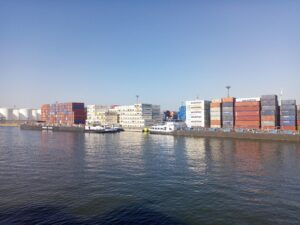
The ContainerHavens project asks, across five major port case studies, whether struggles over environment, labour, and community are reconfiguring the legal and economic architectures that structure ports, or whether they are ultimately constrained by them. The Antwerp case suggests both are true at once.
The system has moved under pressure. Organised and sustained citizen action led to a parliamentary investigation, the 3M settlement, some permit refusals. Yet the underlying architecture remains intact, as the legal separation between port governance and industrial liability persists. Cumulative environmental impacts remain invisible in regulatory assessments. And the health consequences of decades of contamination will take generations to be fully known, long after any settlement or compensation has been paid.
These questions are not unique to Antwerp. The conditions under which environmental action takes place vary enormously: in Cartagena, Colombia, the country with the highest number of killings of environmental defenders in the world, the stakes are existential. In Tanger Med, the port’s direct ties to the Moroccan state make certain contestations practically impossible.
Meanwhile, PFAS-contaminated soil excavated in Zwijndrecht is not being destroyed, it is being moved. Antwerp may eventually meet its remediation targets, but the contamination is simply being redistributed across Flanders, creating new contaminated sites in the process. And the level of contamination at which a site is declared clean enough to close the file is not determined by science alone, it is also a political decision, one that industry has historically sought to influence.
Learn more
University of Antwerp
Faculty of Law and Institute of Development Policy (IOB)
Stadscampus – Gebouw V
Venusstraat 23
2000 Antwerp, Belgium
Research sites
Follow us
ContainerHavens 2026 | Disclaimer | Privacy policy | Cookie policy