
Research site
San Pedro Bay Port Complex
The Port of Los Angeles and the Port of Long Beach function as integrated systems in the global supply chain. Together they form the San Pedro Bay Port Complex, the largest maritime gateway in North America by container throughput, handling more than 30% of containerized imports into the United States. Individually, each rank among the busiest ports in the world, and combined, they are in the top-10 ranking of busiest port complex globally by container volume.
Celebrated as a driver of economic growth and international trade, its operations depend on increasingly contested labour relations and impose significant environmental burdens on surrounding racialised and working-class communities. ContainerHavens research in San Pedro Bay examines how these tensions are negotiated through automation, labour relations, and environmental justice politics, and how they redefine who counts as a port worker
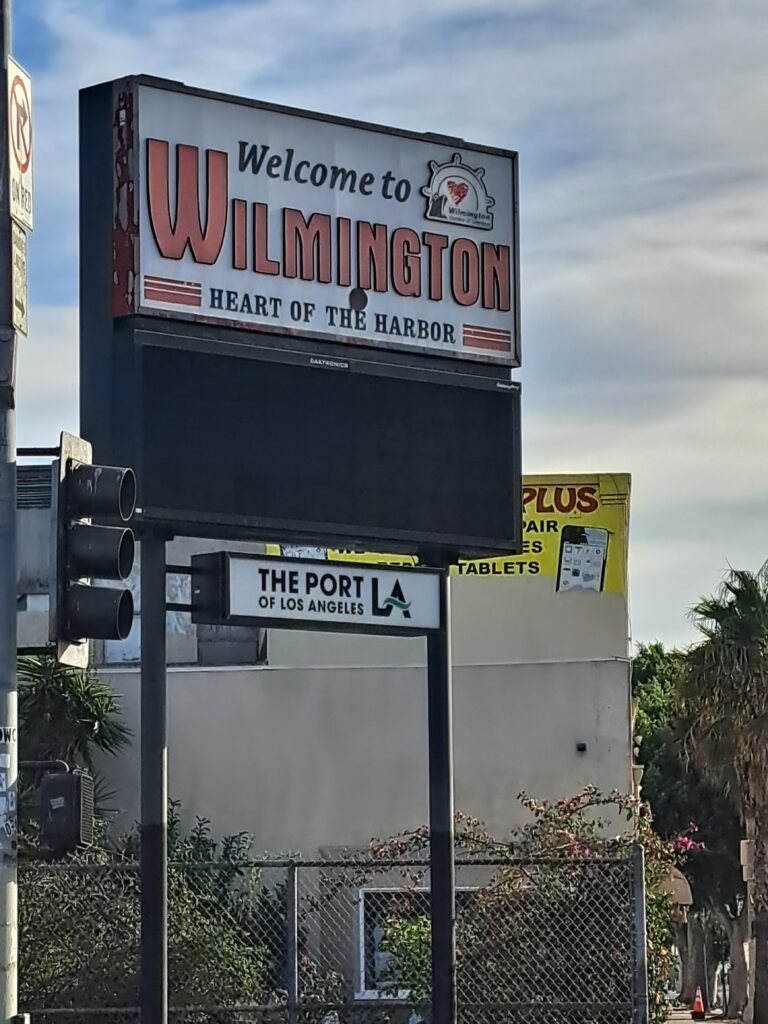
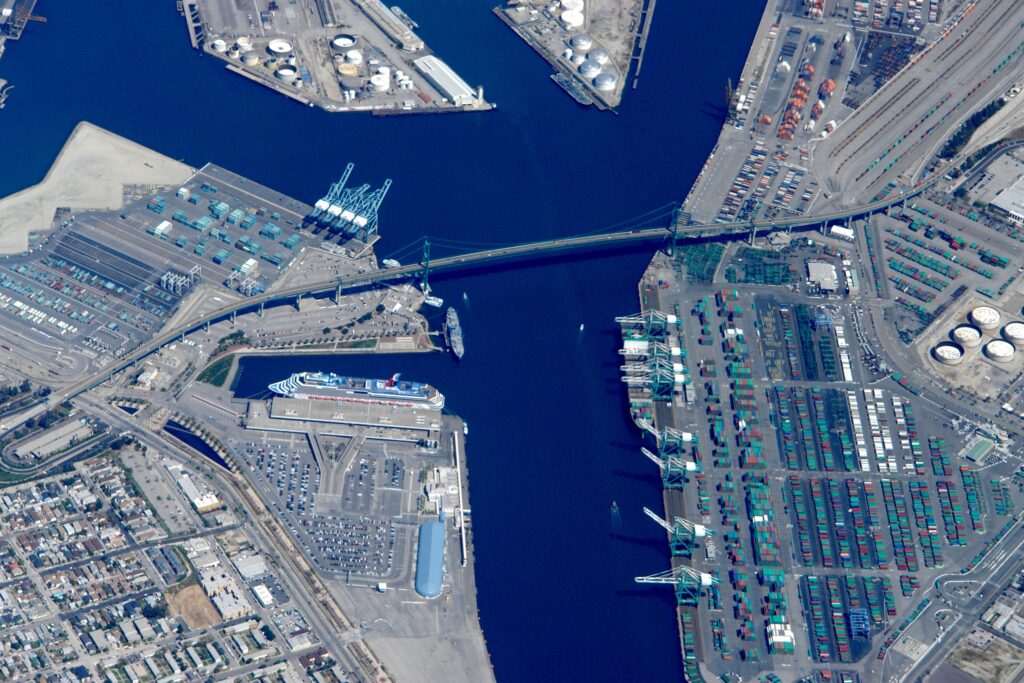
Although the two ports function as a single economic block, they are governed by separate municipalities. The Port of Los Angeles spans about 3,000 hectares (7,500 acres) of land and water along a 69-kilometer (43-mile) waterfront, encompassing San Pedro, Wilmington, and Terminal Island. It operates as a department of the City of Los Angeles and is governed by the Los Angeles Board of Harbor Commissioners, appointed by the Mayor of Los Angeles.
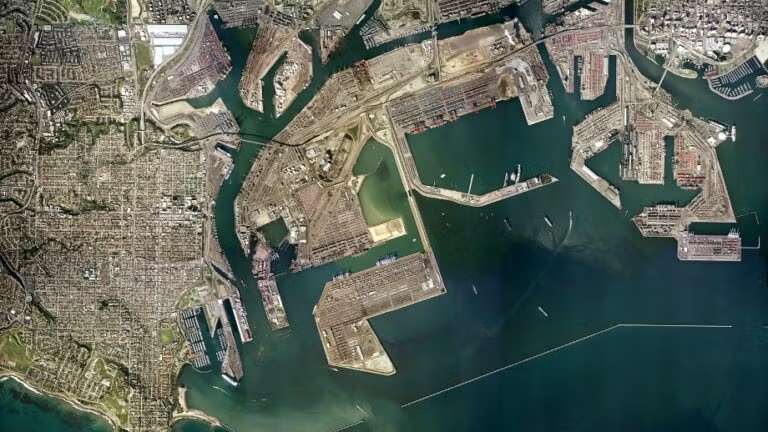
Similarly, the Port of Long Beach is a department with the City of Long Beach and is governed by the Long Beach Board of Harbor Commissioners, appointed by the Mayor of Long Beach. It sits on more than 1,400 hectares (3,500 acres) of land and 1,860 hectares (4,600 acres) of water.
The ports have profound economic and employment impacts. The Port of Los Angeles states that its activities support about 1 million jobs in California alone and about 3 million jobs countrywide, while the Port of Long Beach reports about 543,000 jobs in Long Beach and Orange Counties and 2.7 million across the country. Our assumption is that these numbers reflect the direct, indirect and induced jobs that port metrics are designed to account for and say little about workers’ protection, inclusion, or visibility.
Historically, longshoring work has been the economic and cultural anchor of the communities around the Bay. Research by the UCLA Labor Center, “Automation and the Future of Dockwork at the San Pedro Bay Port Complex,” shows that longshore workers are segmented into different categories: casuals, who remain precarious without International Longshore and Warehouse Union (ILWU)-afforded protection; class B workers, with limited voting rights; and class A workers with full voting rights.
In San Pedro Bay, the central labour question is therefore not simply employment but precarity and technological transformation. As the 2019 Martins & Associates Report shows, the automation drive can be traced back to the 2002 collective bargaining agreement between ILWU and Pacific Maritime Association (PMA), which allowed port operators to introduce technology in the terminals. The 2002 collective bargaining agreement was supplemented by the 2008 agreement which recognized the right of terminal operators to automate while acknowledging that this may result in job losses.
As a result, three of the twelve container terminals in the San Pedro Bay Port Complex have since been automated: Long Beach Container Terminal, APM Terminals, and Transpacific Container Service Corporation (TraPac). The Economic Roundtable Report “Someone Else’s Ocean: Dockworkers, Foreign Shippers and Economic Outcomes,” which compares impacts on longshore employment before and after automation, estimates that automation reduced longshore employment at the automated terminals by about 4% to 6%. Automated ship-to-shore cranes are also reconfiguring the work itself, moving operators from the cranes to remote stations in office buildings. As a result, automation of terminals raises several critical questions. Within our methodological framework, this desktop research guided the design of our fieldwork. These historical and statistical information guided the formulation of our fieldwork questions among others focusing on: which workers are impacted, how jobs are being transformed, whether opportunities for upskilling or re-skilling exist and whether workers want them, and what the economic and social consequences are for workers and surrounding communities.
In port ecosystems, the collective bargaining agreements between ILWU and PMA cover longshore workers, walking bosses, clerks, and some security guards in the port ecosystem. Port activities, however, depends on a much broader workforce. “Someone Else’s Ocean” argues that port workers exceed dockworkers and include: truck drivers, railroad workers, suppliers to the shipping industry, construction workers, and government employees. This list is not exhaustive as port workers extend beyond the boundaries of the port to include other categories of non-unionised, gendered and racialized workers who often experience precarious employment, low wages, and limited protection: warehouse workers, workers in shipyards, and workers in seafarer welfare centres. A large segment of port workers is in effect largely absent from debates about automation and the future of the ports.
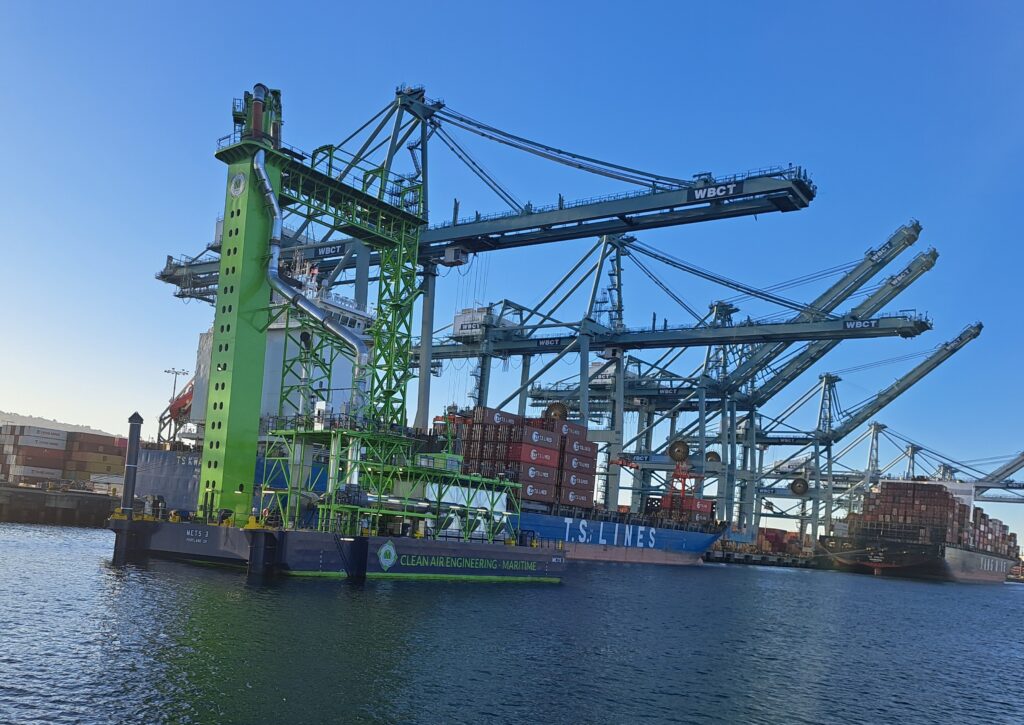
The restructuring of work unfolds alongside longstanding environmental justice conflicts. The Port of Los Angeles presents itself as a sustainable port, committed to zero emissions and supply chain efficiency. However, as Juan De Lara notes in article ‘“This Port is Killing People”: Sustainability without Justice in the Neo-Keynesian Green City,’ emissions from port terminals, ships, trucks and rail nevertheless contribute to severe air pollution, disproportionately affecting nearby communities, many of them racialised, migrant, and working-class. These emissions have raised concerns about public health and environmental justice. Federal and local governments have made efforts to address emissions through the Clean Air Action Plan, but the cumulative impacts of logistics activity remain significant, and have generated tensions between environmental justice and citizen movements, and labour unions.
Ultimately, the FWO ContainerHaven Project inquiry in the case of the San Pedro Bay Port Complex is: “how automation, labour representation, and environmental justice are reshaping labour in one of the world’s largest logistics hubs?”. To answer this question, Peter Kimani, in his PhD Project, examines whose work becomes more precarious or invisible, how this affects workers’ recognition and identity, and how workers and surrounding communities negotiate competing visions of efficiency, sustainability and port development.
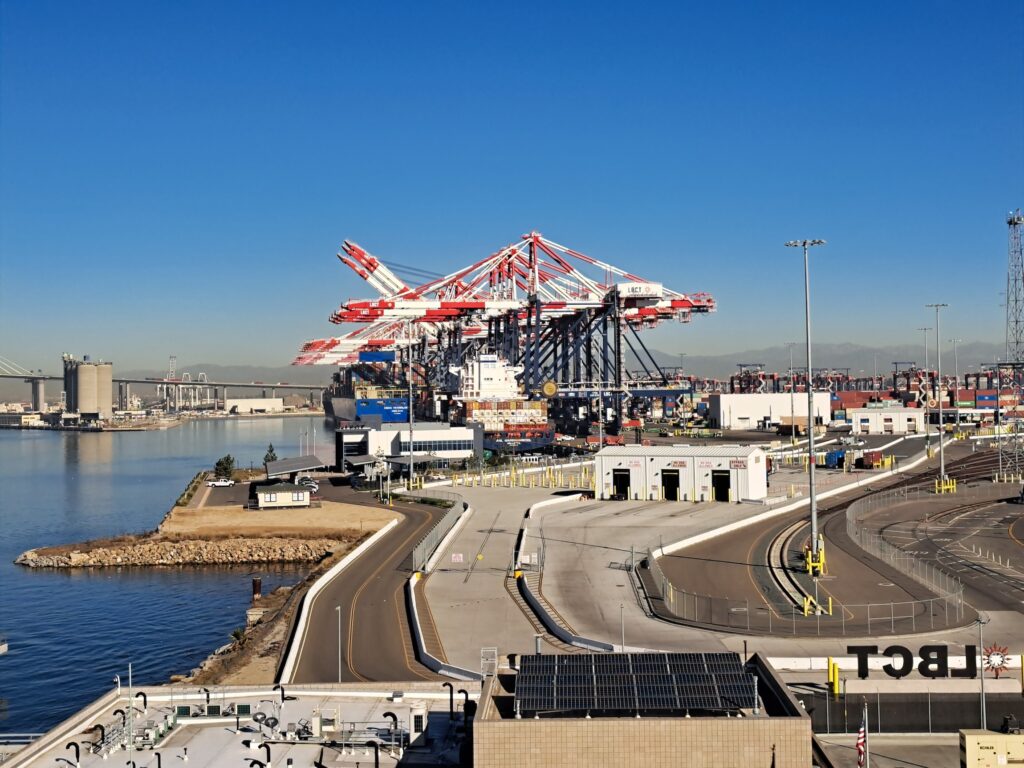
The Port of Los Angeles and the Port of Long Beach function as integrated systems in the global supply chain. Together they form the San Pedro Bay Port Complex, the largest maritime gateway in North America by container throughput, handling more than 30% of containerized imports into the United States. Individually, each rank among the busiest ports in the world, and combined, they are in the top-10 ranking of busiest port complex globally by container volume.
Celebrated as a driver of economic growth and international trade, its operations depend on increasingly contested labour relations and impose significant environmental burdens on surrounding racialised and working-class communities. ContainerHavens research in San Pedro Bay examines how these tensions are negotiated through automation, labour relations, and environmental justice politics, and how they redefine who counts as a port worker
Although the two ports function as a single economic block, they are governed by separate municipalities. The Port of Los Angeles spans about 3,000 hectares (7,500 acres) of land and water along a 69-kilometer (43-mile) waterfront, encompassing San Pedro, Wilmington, and Terminal Island. It operates as a department of the City of Los Angeles and is governed by the Los Angeles Board of Harbor Commissioners, appointed by the Mayor of Los Angeles.
Similarly, the Port of Long Beach is a department with the City of Long Beach and is governed by the Long Beach Board of Harbor Commissioners, appointed by the Mayor of Long Beach. It sits on more than 1,400 hectares (3,500 acres) of land and 1,860 hectares (4,600 acres) of water.
The ports have profound economic and employment impacts. The Port of Los Angeles states that its activities support about 1 million jobs in California alone and about 3 million jobs countrywide, while the Port of Long Beach reports about 543,000 jobs in Long Beach and Orange Counties and 2.7 million across the country. Our assumption is that these numbers reflect the direct, indirect and induced jobs that port metrics are designed to account for and say little about workers’ protection, inclusion, or visibility.
Historically, longshoring work has been the economic and cultural anchor of the communities around the Bay. Research by the UCLA Labor Center, “Automation and the Future of Dockwork at the San Pedro Bay Port Complex,” shows that longshore workers are segmented into different categories: casuals, who remain precarious without International Longshore and Warehouse Union (ILWU)-afforded protection; class B workers, with limited voting rights; and class A workers with full voting rights.
In San Pedro Bay, the central labour question is therefore not simply employment but precarity and technological transformation. As the 2019 Martins & Associates Report shows, the automation drive can be traced back to the 2002 collective bargaining agreement between ILWU and Pacific Maritime Association (PMA), which allowed port operators to introduce technology in the terminals. The 2002 collective bargaining agreement was supplemented by the 2008 agreement which recognized the right of terminal operators to automate while acknowledging that this may result in job losses.
As a result, three of the twelve container terminals in the San Pedro Bay Port Complex have since been automated: Long Beach Container Terminal, APM Terminals, and Transpacific Container Service Corporation (TraPac). The Economic Roundtable Report “Someone Else’s Ocean: Dockworkers, Foreign Shippers and Economic Outcomes,” which compares impacts on longshore employment before and after automation, estimates that automation reduced longshore employment at the automated terminals by about 4% to 6%. Automated ship-to-shore cranes are also reconfiguring the work itself, moving operators from the cranes to remote stations in office buildings. As a result, automation of terminals raises several critical questions. Within our methodological framework, this desktop research guided the design of our fieldwork. These historical and statistical information guided the formulation of our fieldwork questions among others focusing on: which workers are impacted, how jobs are being transformed, whether opportunities for upskilling or re-skilling exist and whether workers want them, and what the economic and social consequences are for workers and surrounding communities.
In port ecosystems, the collective bargaining agreements between ILWU and PMA cover longshore workers, walking bosses, clerks, and some security guards in the port ecosystem. Port activities, however, depends on a much broader workforce. “Someone Else’s Ocean” argues that port workers exceed dockworkers and include: truck drivers, railroad workers, suppliers to the shipping industry, construction workers, and government employees. This list is not exhaustive as port workers extend beyond the boundaries of the port to include other categories of non-unionised, gendered and racialized workers who often experience precarious employment, low wages, and limited protection: warehouse workers, workers in shipyards, and workers in seafarer welfare centres. A large segment of port workers is in effect largely absent from debates about automation and the future of the ports.
The restructuring of work unfolds alongside longstanding environmental justice conflicts. The Port of Los Angeles presents itself as a sustainable port, committed to zero emissions and supply chain efficiency. However, as Juan De Lara notes in article ‘“This Port is Killing People”: Sustainability without Justice in the Neo-Keynesian Green City,’ emissions from port terminals, ships, trucks and rail nevertheless contribute to severe air pollution, disproportionately affecting nearby communities, many of them racialised, migrant, and working-class. These emissions have raised concerns about public health and environmental justice. Federal and local governments have made efforts to address emissions through the Clean Air Action Plan, but the cumulative impacts of logistics activity remain significant, and have generated tensions between environmental justice and citizen movements, and labour unions.
Ultimately, the FWO ContainerHaven Project inquiry in the case of the San Pedro Bay Port Complex is: “how automation, labour representation, and environmental justice are reshaping labour in one of the world’s largest logistics hubs?”. To answer this question, Peter Kimani, in his PhD Project, examines whose work becomes more precarious or invisible, how this affects workers’ recognition and identity, and how workers and surrounding communities negotiate competing visions of efficiency, sustainability and port development.
Latest updates on the Port of San Pedro Bay Complex
No stories yet! The first posts from the research team are in progress. Bookmark this page to follow them as they appear.
About this research
This page draws on Peter Mbogo Kimani’s fieldwork at San Pedro Bay. If any of this connects with what you’re working on, we’d be glad to hear from you.
University of Antwerp
Faculty of Law and Institute of Development Policy (IOB)
Stadscampus – Gebouw V
Venusstraat 23
2000 Antwerp, Belgium
Research sites
Follow us
ContainerHavens 2026 | Disclaimer | Privacy policy | Cookie policy